There was a time when I would flip through my passport pages just to admire the collection of immigration stamps from different countries. As someone who loves travelling, every stamp was more than just ink on paper—it was a memory. It was a tiny reminder of the excitement of landing in a new country, clearing immigration and beginning another adventure.
Sadly, that’s one travel ritual I won’t get to enjoy on my future trips to Europe.
If you’re planning a holiday to Europe, be prepared for a new way of crossing borders. The European Union’s Entry/Exit System (EES), which became fully operational in April 2026, has replaced passport stamping for most non-European travellers entering or leaving the Schengen area. Instead of receiving a physical stamp, your journey is now recorded digitally using your passport details, fingerprints, facial photograph and the exact date and time of entry and exit.
While it marks a significant step towards smarter border management, it also signals the end of an era for travellers who cherished passport stamps as souvenirs.
My First Experience with the EES
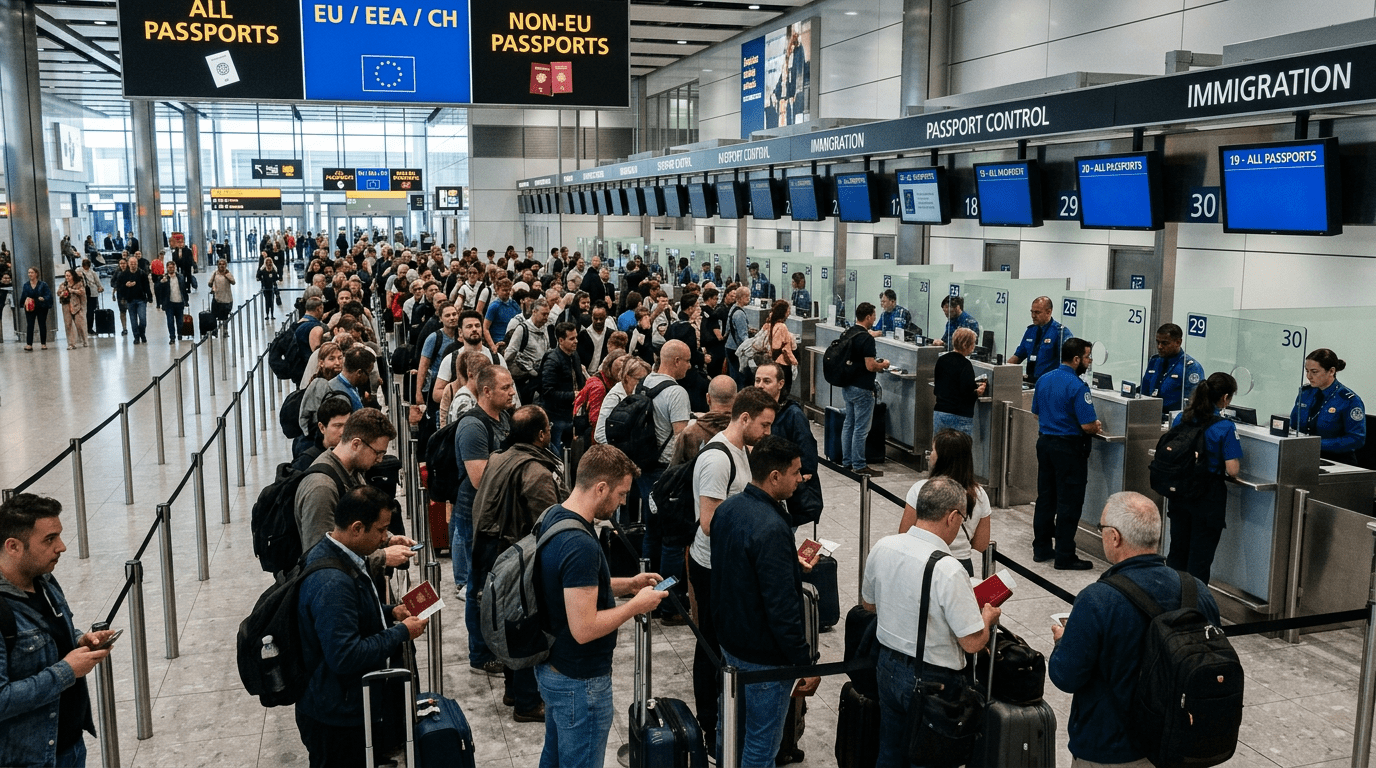
When the EES was first introduced, social media was flooded with stories of long immigration queues across Europe. Reports emerged of travellers waiting for up to two hours at some airports, with a few even missing connecting flights while completing the new biometric registration.
Naturally, I was prepared for the worst.
However, my experience at Zurich Airport in June 2026 turned out to be surprisingly smooth. There were plenty of counters dedicated to non-EU passport holders, and the entire immigration process—from joining the queue to clearing border control—took around 40 minutes.

At the counter, the immigration officer scanned my passport before asking me to place my fingers on a biometric scanner. A small kiosk positioned in front of the desk captured my facial photograph, and within minutes, the formalities were complete. The process was simple, organised, and far less intimidating than I had expected.
A Few Tips for Indian Travellers
If you’re travelling on a Schengen tourist visa and plan to visit multiple countries, it’s a good idea to carry printed copies of your hotel bookings, return flight tickets, travel itinerary and proof of onward travel.
Although not every traveller is asked for these documents, immigration officers may request them during border checks. Having everything readily available can make the process smoother and help avoid unnecessary delays.
What Exactly Is the Entry/Exit System?
The Entry/Exit System (EES) is a digital border management system for non-EU nationals visiting the Schengen area for short stays of up to 90 days within any 180-day period.
On your first visit after the EES comes into effect, border officials will:
- Scan your passport
- Capture your fingerprints
- Take a facial photograph
- Record your date and place of entry digitally
Instead of receiving a passport stamp, all this information is securely stored in a central digital database.
For future trips, your biometric data will already be on record. Border officials will simply verify your identity, making subsequent entries quicker and reducing paperwork.
The good news is that once you’ve entered the Schengen area, nothing changes within the region. You can continue travelling freely between Schengen countries without additional immigration checks, just as before.
Faster Borders in the Future
Several Schengen countries are also introducing self-service kiosks, automated e-gates and mobile applications that will allow travellers to pre-register parts of their information before reaching passport control.
Travellers with biometric passports may eventually be able to complete much of the process themselves, with border officers only carrying out a final verification. The aim is to reduce waiting times and make border crossings more efficient.
Who Does the EES Apply To?
The EES applies to non-EU nationals travelling to the Schengen area for short stays, including most Indian tourists.
However, Indian citizens holding long-stay visas or residence permits for work, study or family reunification are exempt. Their entry and stay continue to follow separate immigration procedures.

Why Has Europe Introduced the EES?
The European Union says the new system is designed to modernise border management and improve security.
By replacing manual passport stamps with digital records, the EES aims to:
- Speed up immigration procedures
- Reduce human error
- Maintain accurate travel records
- Detect overstays more efficiently
- Strengthen security across the Schengen area
In the long run, it is expected to make border crossings faster for regular travellers while helping authorities better manage immigration.
Goodbye to Passport Stamps
As practical as the new system is, I couldn’t help feeling a little nostalgic after clearing immigration.
For many travellers, passport stamps were more than proof of entry—they were keepsakes. Each one marked the beginning of a new adventure, whether it was hiking through the Alps, wandering cobbled European streets or discovering a café in a city you’d never visited before.
Europe’s borders may now be paperless, but the memories will remain just as vivid. Even so, I’ll miss the simple joy of collecting passport stamps—those tiny souvenirs that quietly told the story of every journey.

