
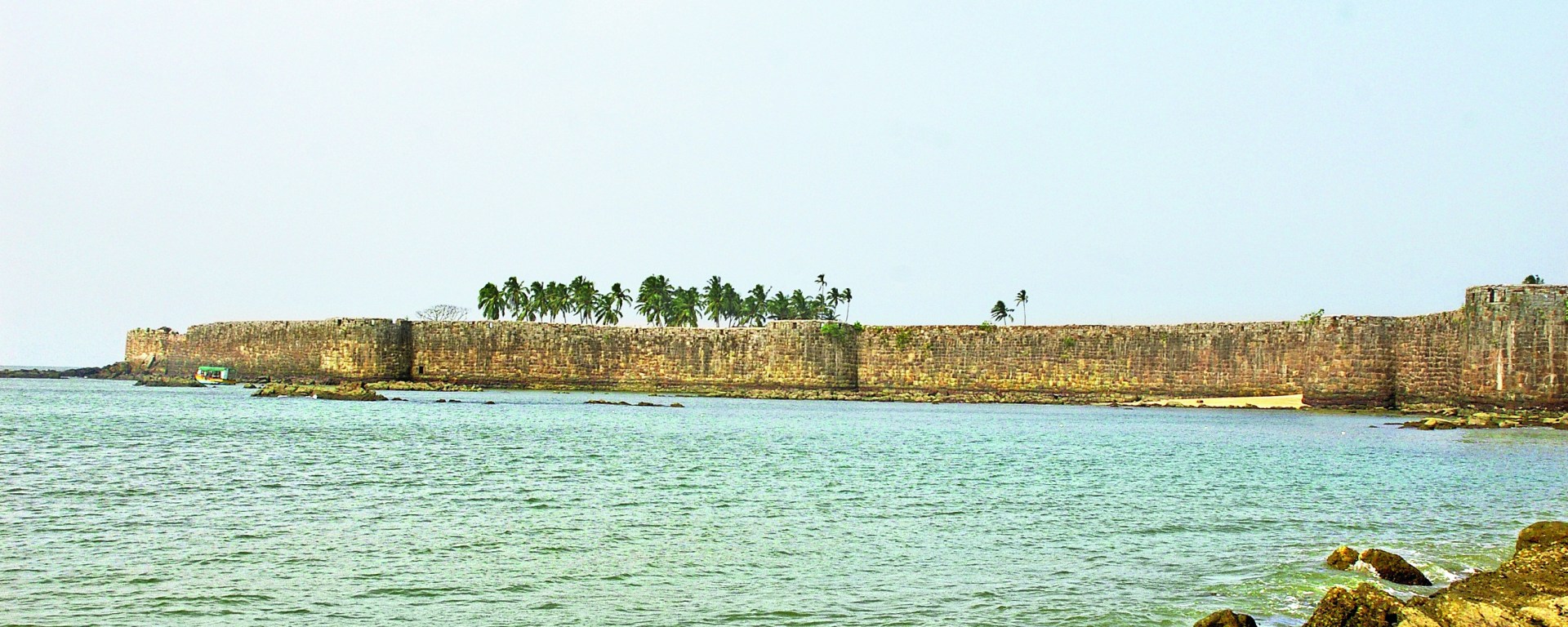
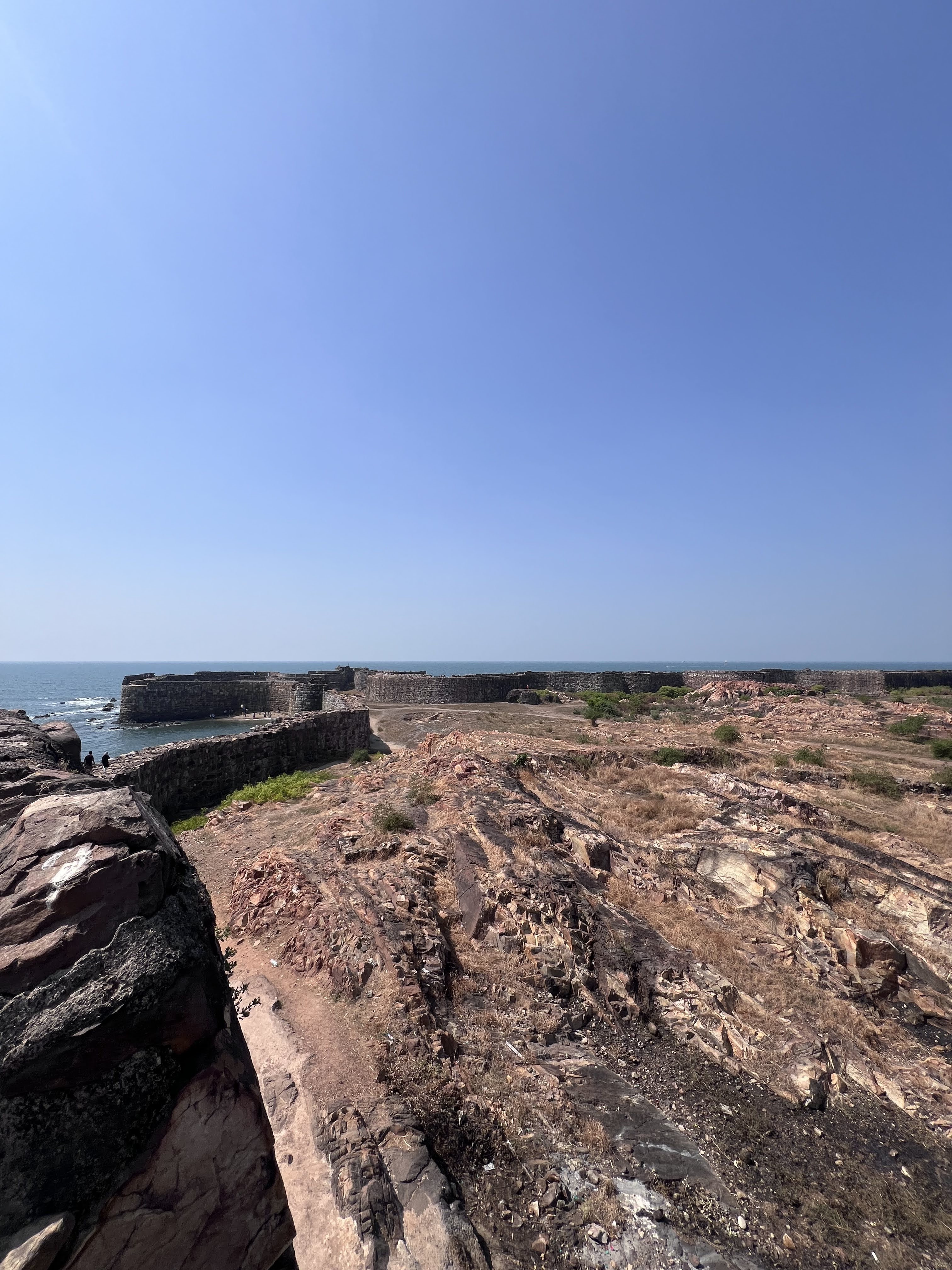
As waves crash against the 30-foot-high walls of the massive Sindhudurg Fort, our boatman skillfully navigates the rocks strewn around the structure to reach its entrance, concealed among a whopping 42 bastions.
Our 15-minute boat ride from Malvan jetty to the fort is anything but dull. Swaying in the choppy waters, chants of ‘Jai Bhavani Jai Shivaji’ and the war cry ‘Har Har Mahadev’ reverberate in the air as we inch closer to the crown jewel of the Maratha Empire.
After docking into the jetty in the middle of the Arabian sea, we climb down a rickety ladder to head inside in what seems an entry path to the colossal fort.
A twisting, curving and wet rocky path with high walls leads us inside.
A small south-facing Hanuman temple guards the main entry doorway as we begin to explore the sea fort.
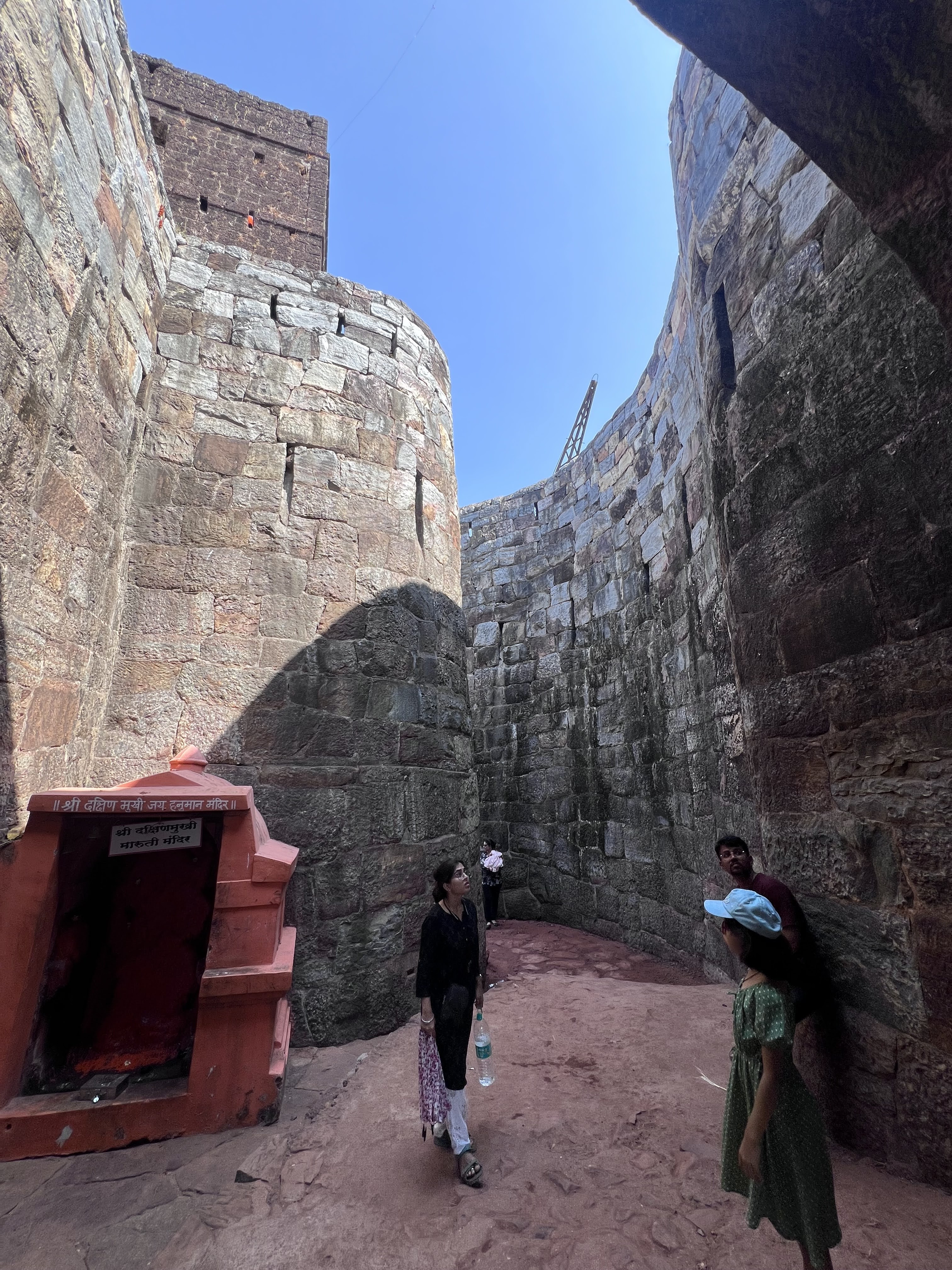
Although I have been to Sindhudurg Fort many years ago, revisiting history as an adult gave me a fresh perspective.
About Sindhudurg Fort
Sindhudurg Fort is a sea fort built by Chhatrapati Shivaji Maharaj, the founder of the Maratha empire, on the rocky island of Kurte in Arabian Sea just off the Konkan coast near Malvan in the Indian state of Maharashtra on the west coast
Chhatrapati Shivaji Maharaj was admired for his strategic thinking and visionary approach. He set up a naval arm, known as Maratha Navy, to strengthen the coastline. He commissioned several forts in the sea along the Konkan coast and started constructing naval bases to protect the borders, right from Mumbai in the north to Sindhudurg in the south.
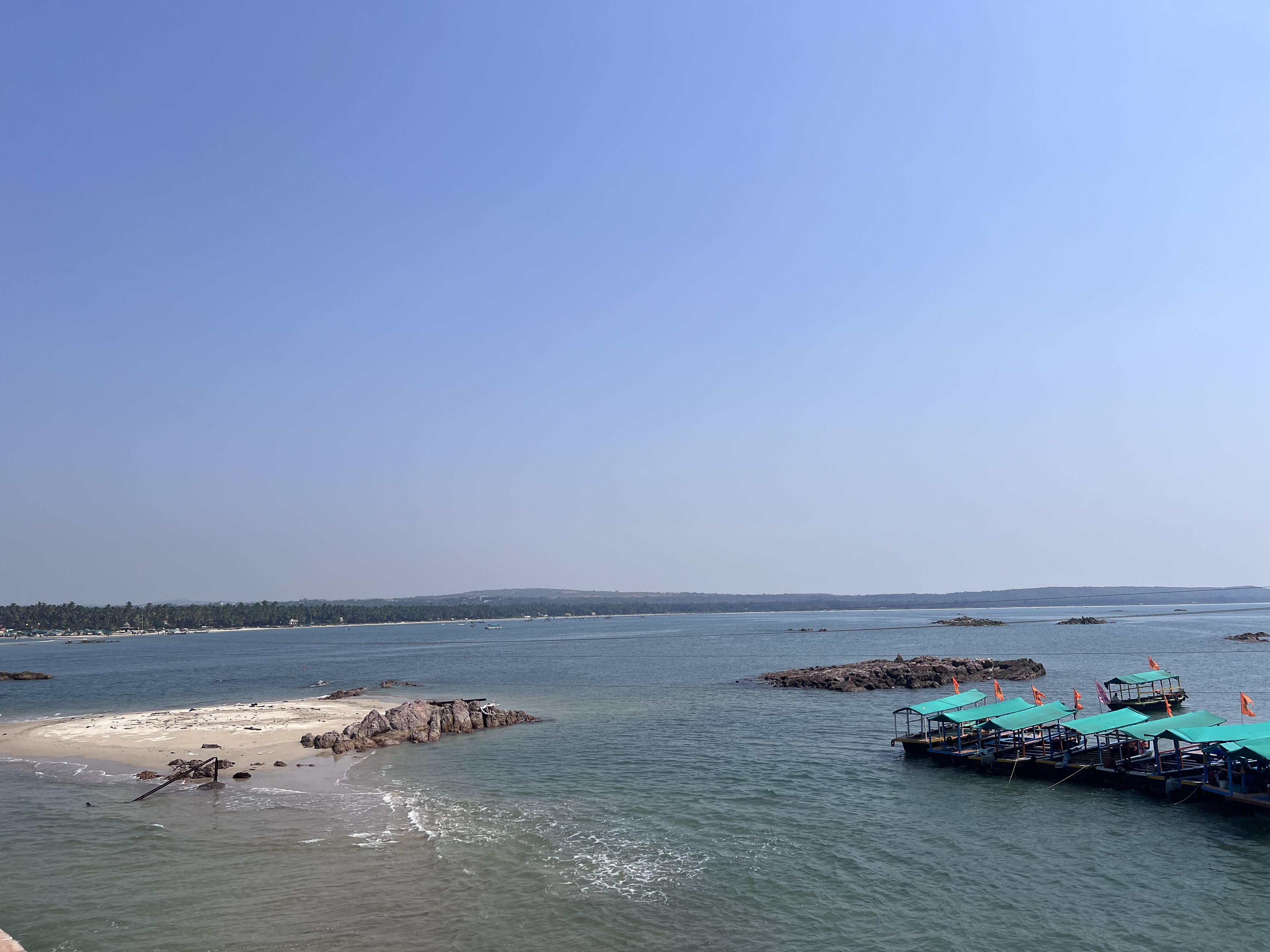
The sea forts were built to safeguard the Maratha empire from foreign invasions, such as English, Dutch, French and Portuguese and also to keep an eye on Murud-Janjira – one of the strongest sea forts in India – which was under the control of Siddis. .
A Ferry Ride Away
Sindhudurg Fort being a sea fort, the only way to reach it is in a boat. Ferries leave from Malvan jetty and it takes about 15 minutes to reach the fort entrance.
Expect hour-long queues to get inside the ferry during weekends.
Once onboard, each person gets a life jacket, even the kids, which is impressive considering the general lack of safety standards in India.
Building Sindhudurg Fort
It wasn’t easy to build the fort. The Marathas had to transport every brick and nail to the island by boats, and the choppy sea proved to be a challenge.
It took Marathas around four years to build Sindhudurg fort. The foundation stone was laid on November 25, 1664, and the work ended in 1667.
It is spread over 48 acres, with around 3 km-long fortification. The defensive walls are massive and are 30ft high and 12ft thick.
According to records, more than 3,000 people worked tirelessly to build the fort.
The massive fort is visible from the coastline, but it is almost impossible to find its entrance as it is skillfully concealed to deter enemies from entering the fort easily.
Once inside, we headed to the Sindhudurg Fort Tourist Information Centre. We hired the services of a guide to show us around the fort. The guides have a wealth of information, stories and folk tales to narrate for us to learn and understand history better.
The guide fees are Rs 500 for a group tour, and I recommend hiring one.
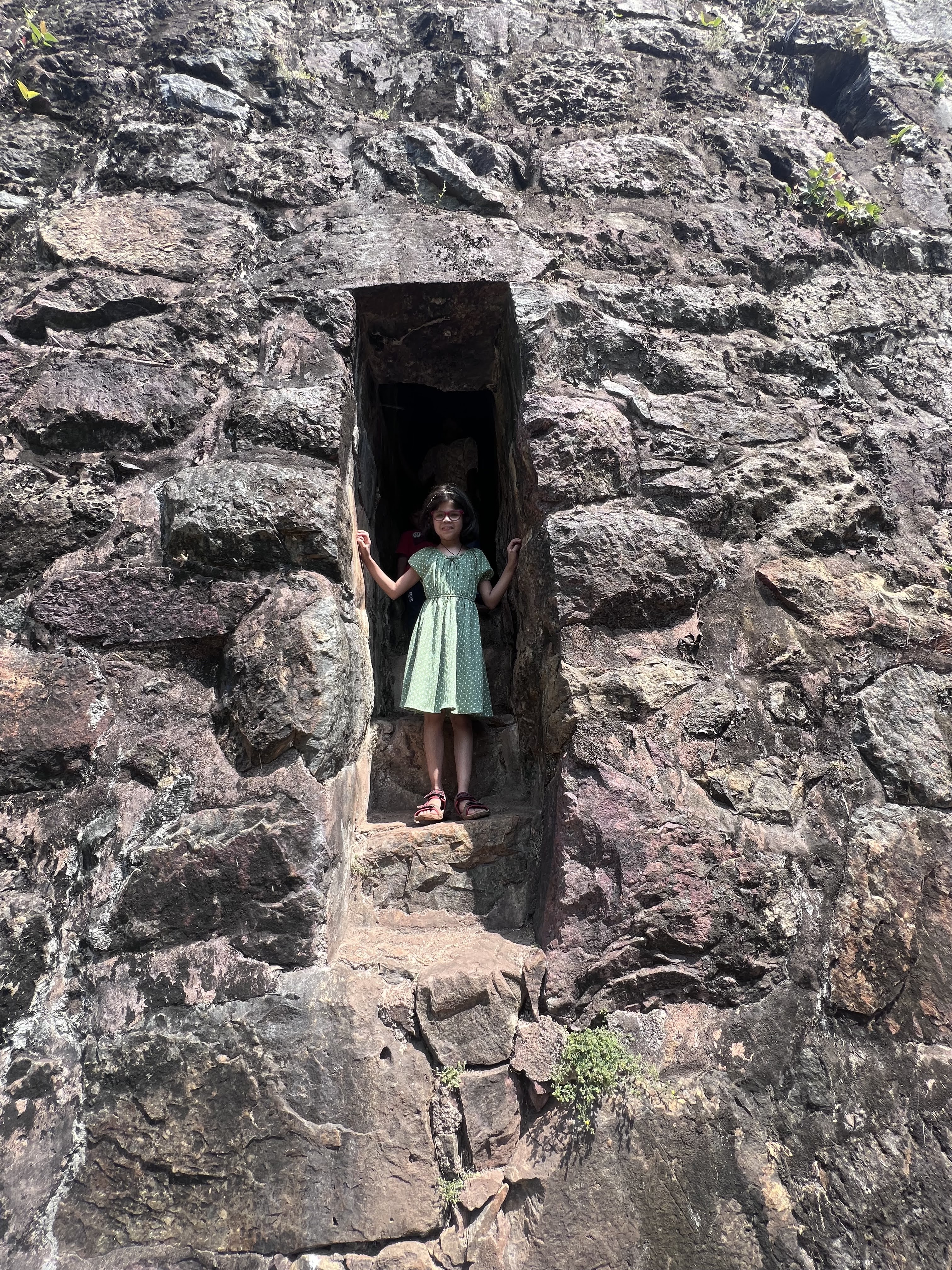
Exploring Sindhudurg Fort
Sindhudurg Fort has several temples on its premises.
There is a beautiful temple dedicated to Chhatrapati Shivaji Maharaj, which was constructed by his son, Rajaram, in memory of his father. The Shivrajeshwar Temple is the only such temple for Chhatrapati Shivaji Maharaj on a fort.
The idol in the temple looks like a local boatman, and in front of the idol is Tulja, his battle sword.
Several other temples inside the fort are dedicated to deities like Jarimari, Hanuman and Bhawani Mata.
The fort also has imprints of Shivaji’s hand and foot encased in glass on one of the ramparts. The imprints have faded over time, and one needs to look closely through the glass to see them.
As we explored the fort, we could see several ruins strewn across.
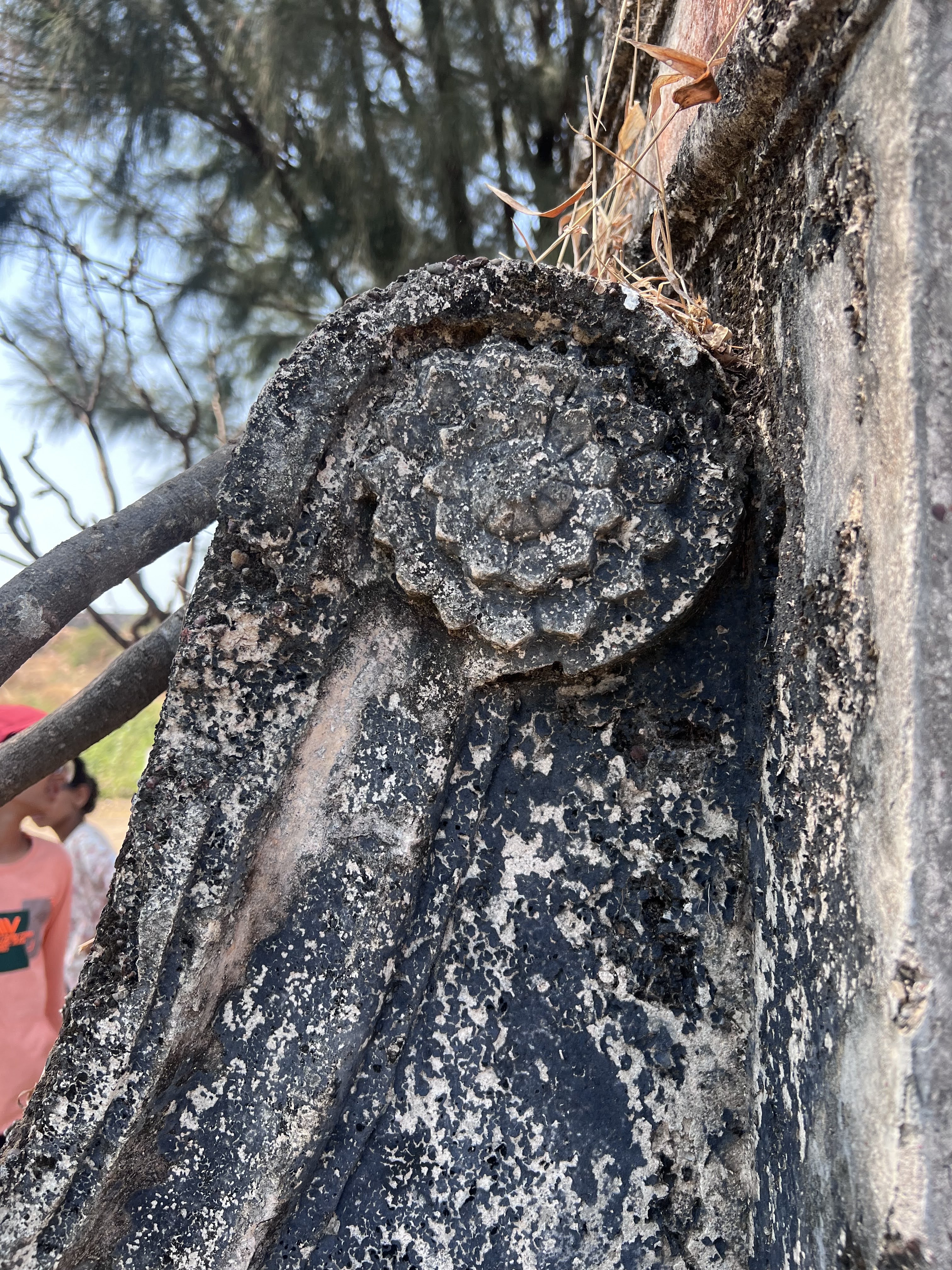
A grand palace once stood at the spot, with a broken compound wall carved with intricate lotus flowers, the only structure left as a stark reminder of the glorious past.
Calling It A Home
Sindhudurg Fort was inhabited by several families, many of whom continue to call the fort their home.
The residents indulged in limited forms of agriculture and primarily depended on ferry boats to transport necessary goods and supplies.
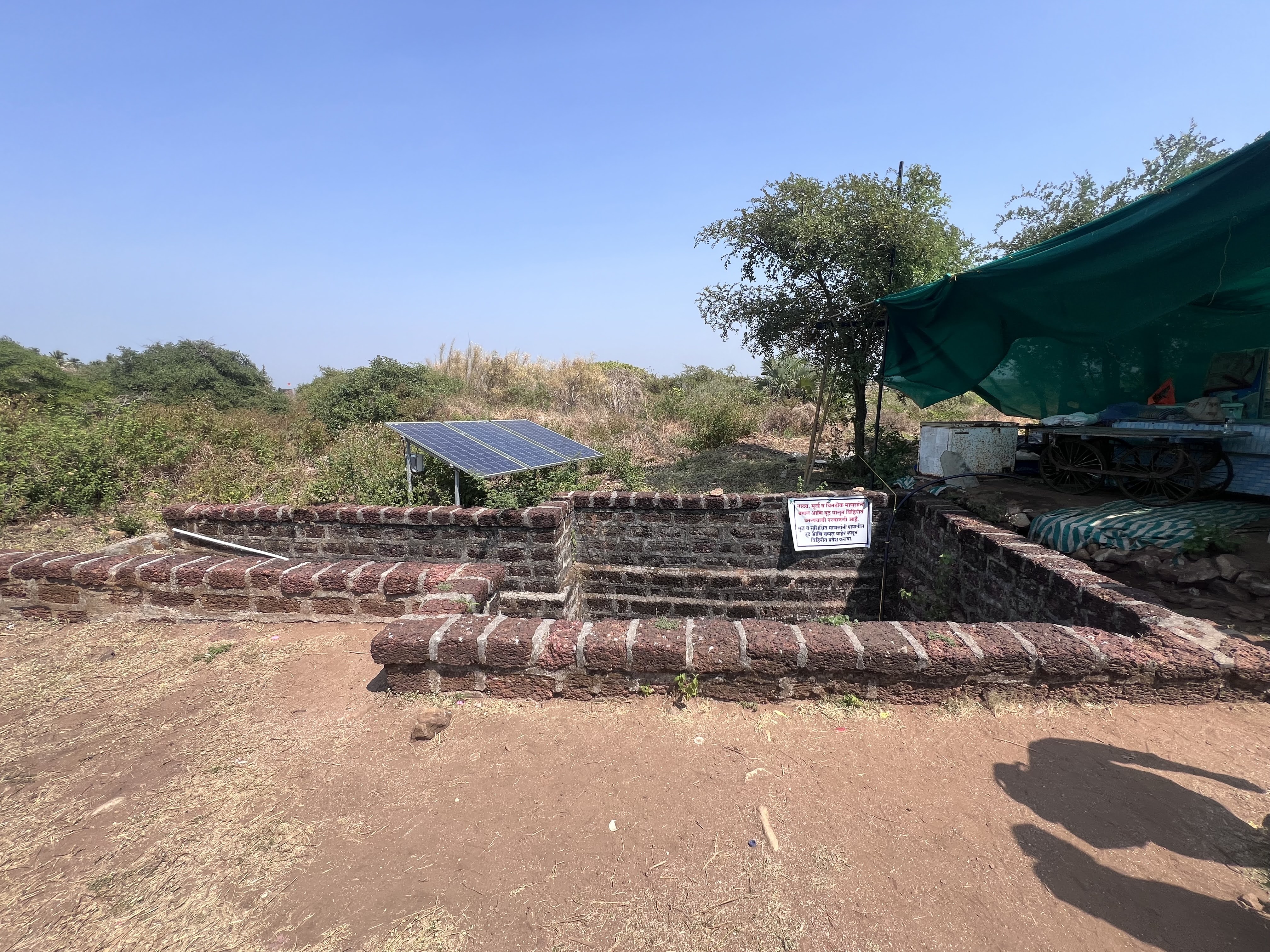
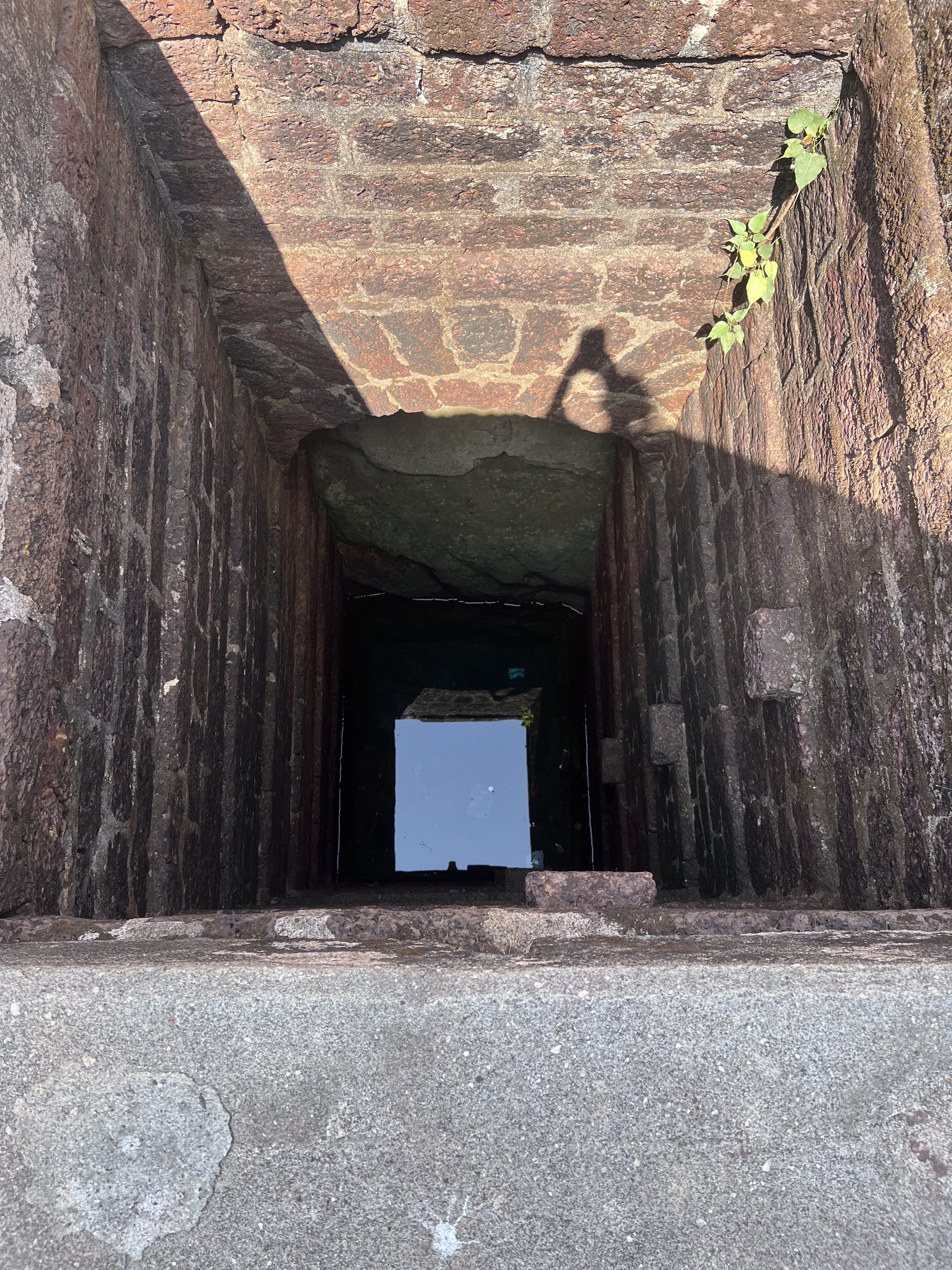
But Chhatrapati Shivaji Maharaj ensured the residents were never left wanting for water. He built three wells — Dudhbav (milk well), Sakharbav (sugar well) and Dahibhav (curd well). One of the unique features of the fort is that despite being surrounded by the salty sea, the three wells provided fresh water and continue to do so even today.
Access to the fort is closed during monsoon, so plan a trip accordingly. Winter months are best as the fort offers limited shade and it takes over an hour to properly explore it.
Don’t Miss These Spots
– Imprints of Chhatrapati Shivaji Maharaj on the ramparts
– Shivrajeshwar Temple dedicated to Chhatrapati Shivaji Maharaj
– Three freshwater wells — Dudhbav, Sakharbav and Dahibav
– Ruins of the palace
– Toilet block built on the ramparts of the fort
 Tugging My Luggage
Excellent A very esstionsial and helpful information sir. You’re describe these information very understanding language very nice sir. Hope every one can visit this beautiful place.http://niharbanne.lovestoblog.com/?p=116
LikeLiked by 1 person
Thank you for this refreshing piece which helped refresh my trip to the fort as a kid. I distinctly remember telling my father that Shivaji’s footprint was very small and looked like a kid’s.
LikeLiked by 1 person