
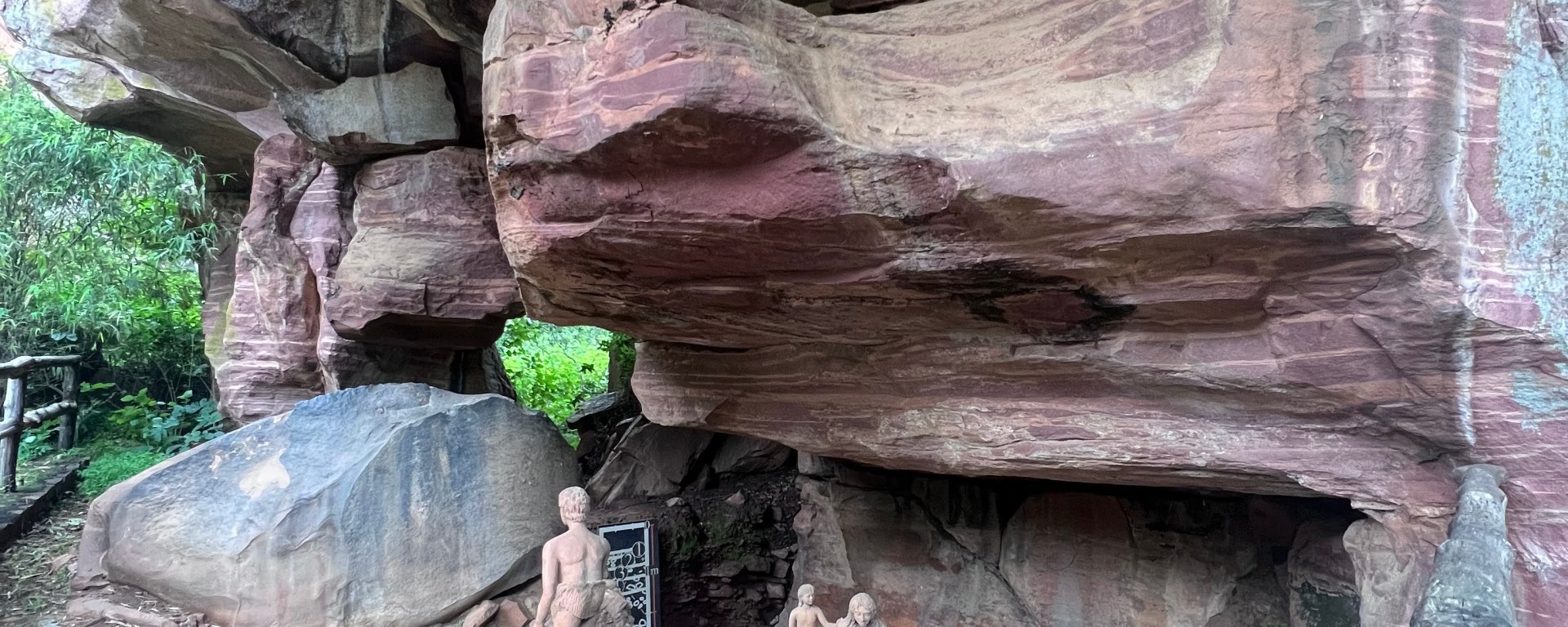
I often surf the internet to find interesting articles, and a few years ago, I read about the Bhimbetka Rock Shelters in Madhya Pradesh. Their unique structure and rock paintings intrigued me, so I added them to my bucket list. However, with so many other accessible places to visit, Bhimbetka ended up at the bottom of the list. It wasn’t until my friend’s husband got a posting near Bhopal, just a few hours from Bhimbetka, that I thought about visiting it again.
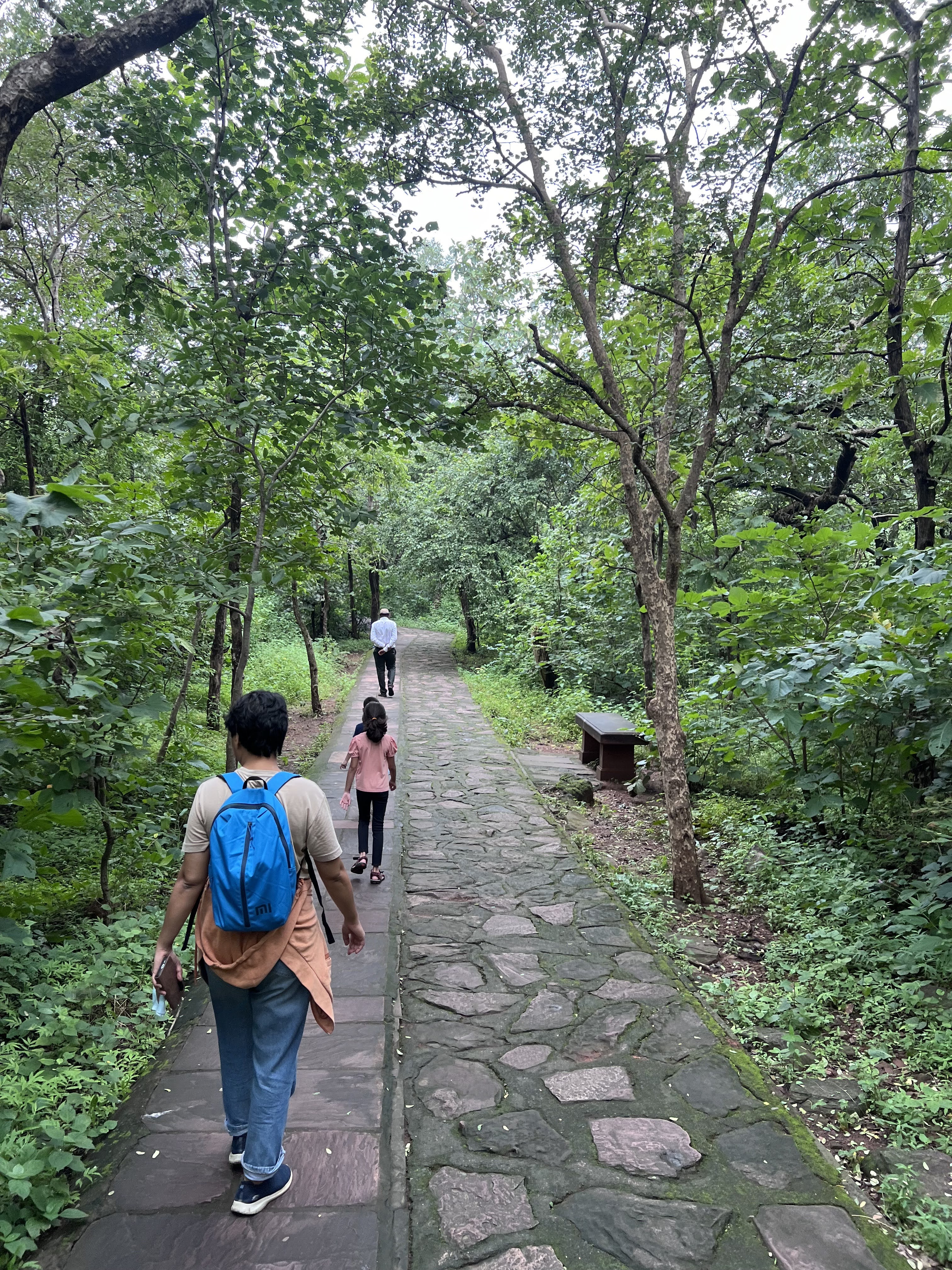
The shelters are roughly 45km away from Bhopal, the capital of the state of Madhya Pradesh, but the change in landscape couldn’t be any more stark.
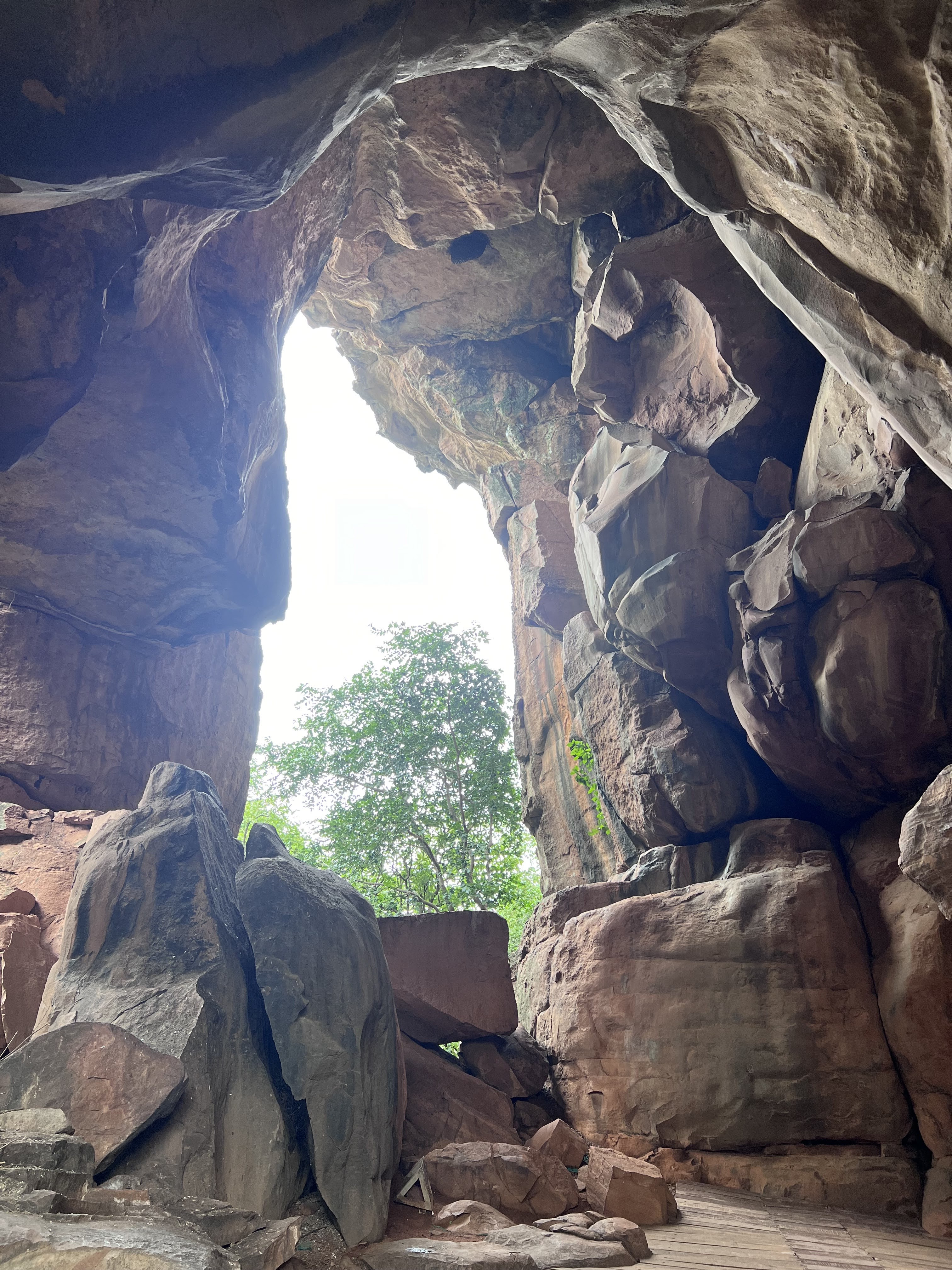
Located in the Ratapani Wildlife Sanctuary at the foothills of the Vindhya Range in the Indian state of Madhya Pradesh, the Bhimbetka Rock Shelters allow visitors to step back into prehistoric times when humanity was undergoing significant transitions and making remarkable discoveries.
These rock shelters date back to the Paleolithic and Mesolithic periods.
What are Bhimbetka Rock Shelters?
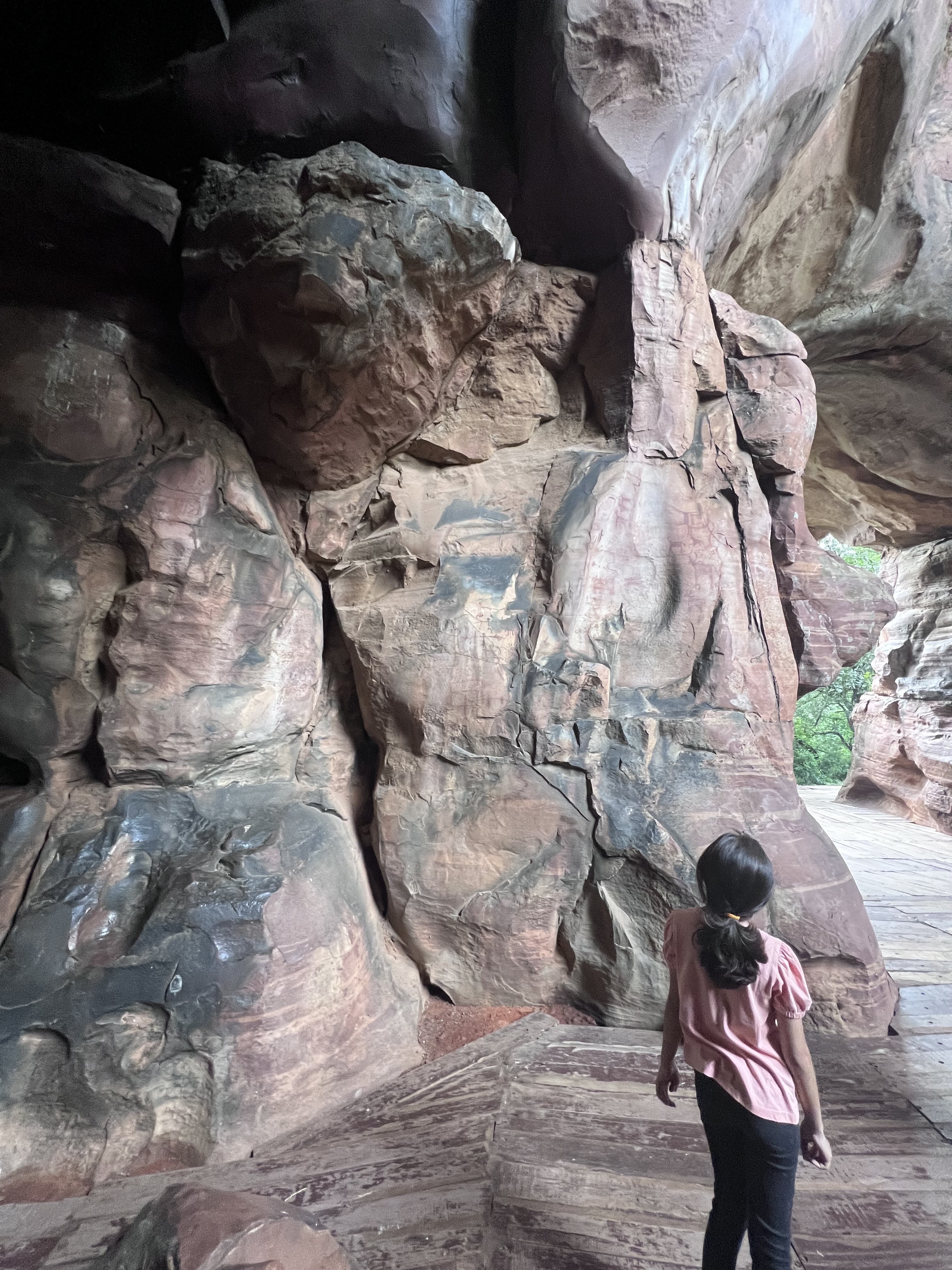
Rock shelters were primarily used for shelter from natural events and habitation.
According to folklore, the name Bhimbetka is derived from the Indian mythological Mahabharata. Bhim-bet-ka means Bheem sat on these rocks.
Apart from being inhabited for thousands of years, Bhimbetka is the largest collection of prehistoric art in India. They feature paintings that depict humans, animals, everyday life, celebrations, battles, and other important events of the era. According to archaeologists, these rock shelters are the beginning of ancient Indian history, even before the Indus and Harappan civilizations.
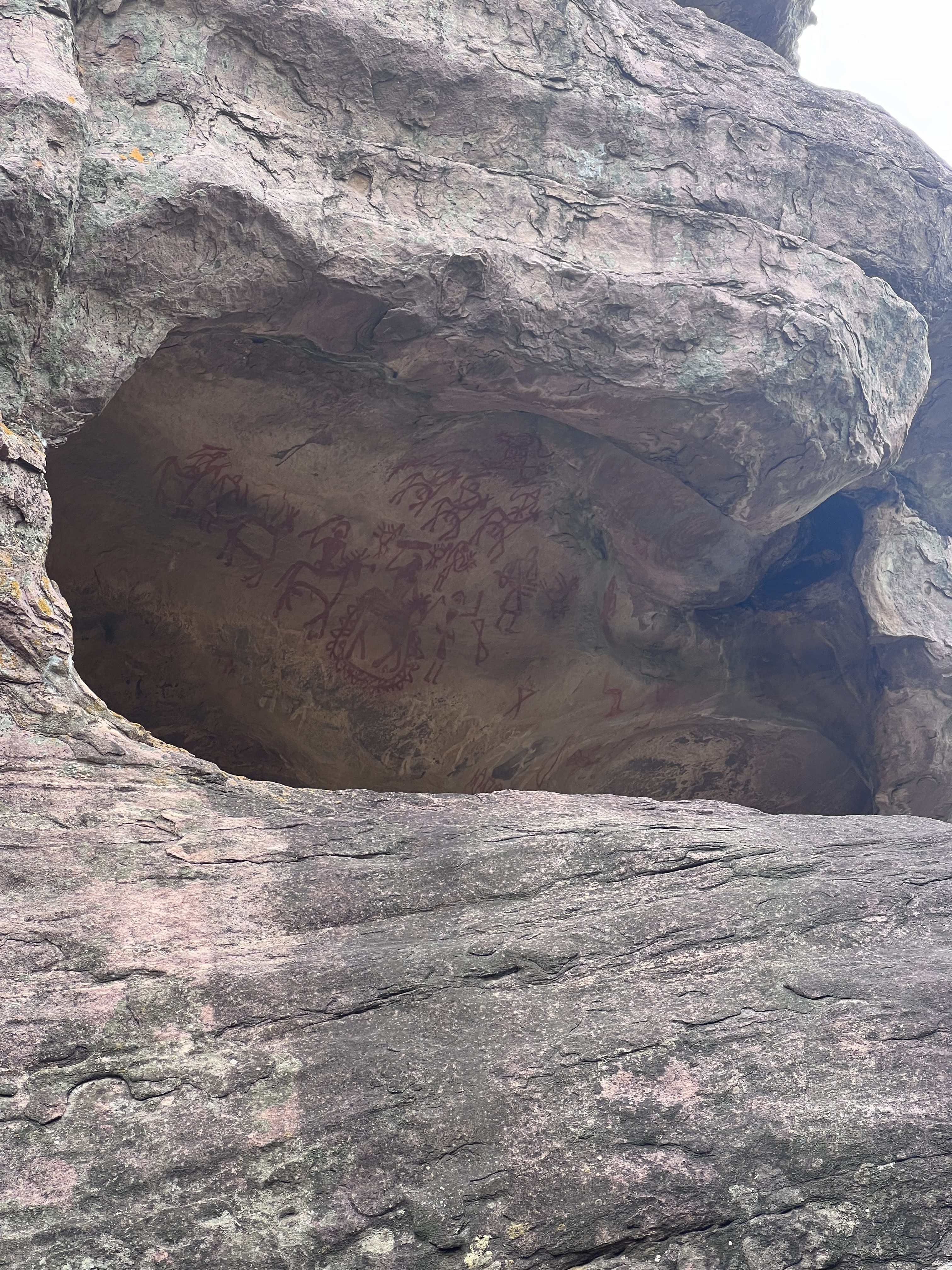
As numerous changes took place in the social and cultural aspects of humans, these rock paintings are the best way to learn about the social and cultural fabric of the society from the Mesolithic to the medieval period.
In Bhimbetka, there are over 750 rock shelters, of which around 15 are accessible to visitors. Around 500 of the 750 shelters are adorned with paintings. Of these, 400 shelters are distributed over five hills in the core area.
These hills are known as
1) Bineka
2) Bhonrawali
3) Bhimbetka
4) Lakha Juar (east)
5) Lakha Juar (west)
In the Bhimbetka zone which is open to visitors, there are a whopping 243 rock shelters but only 15 of those are open for us to see.
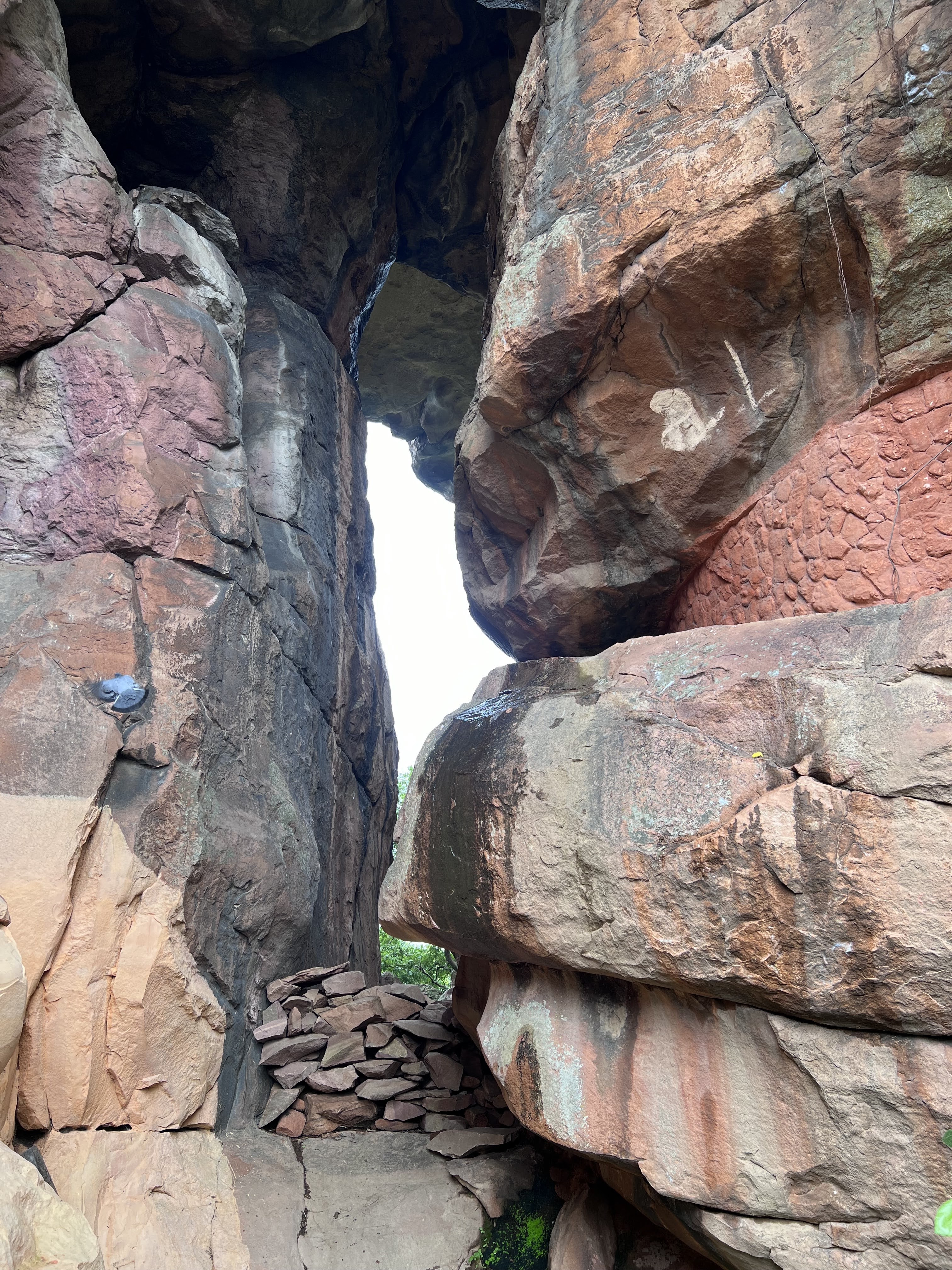
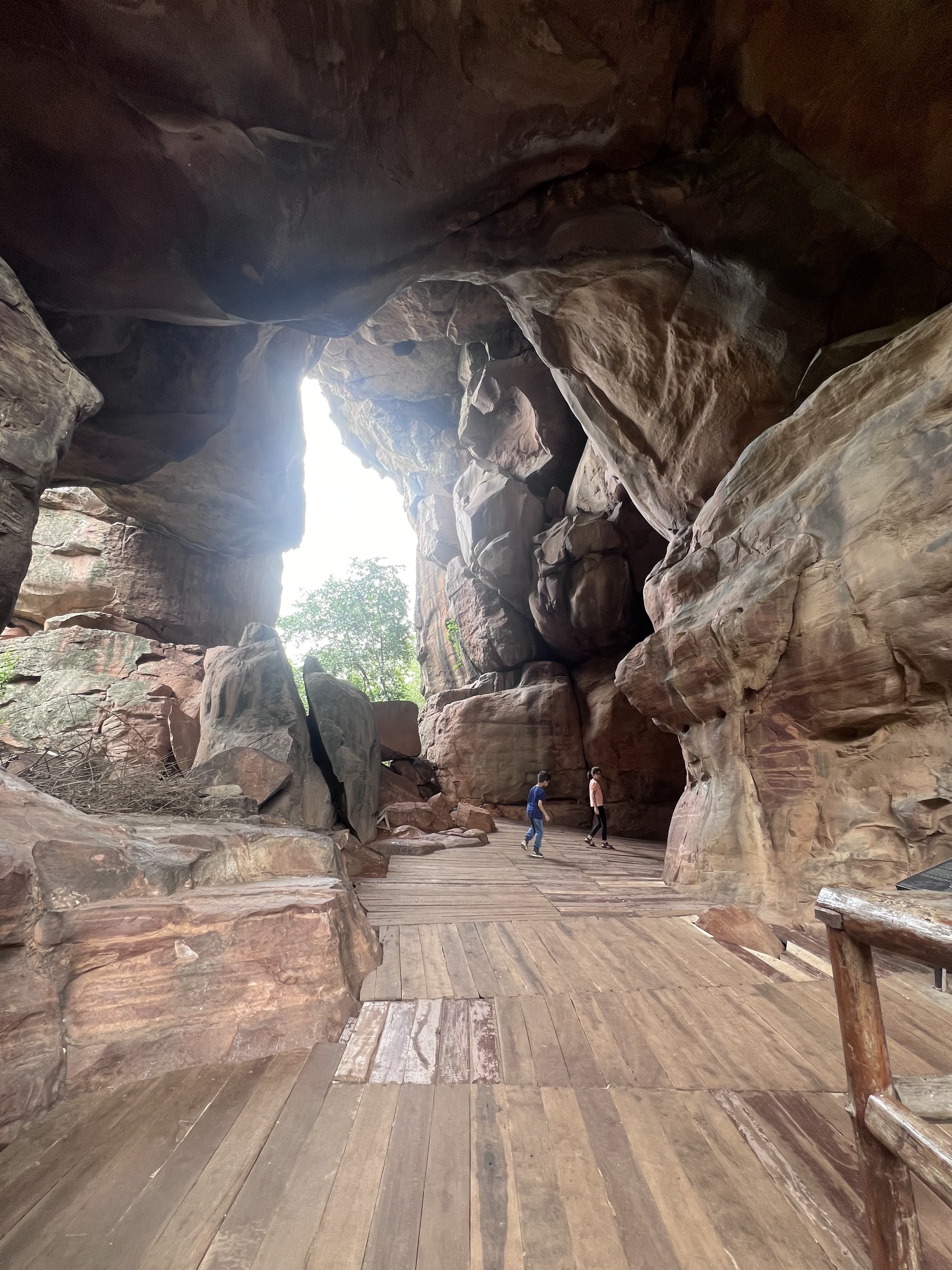
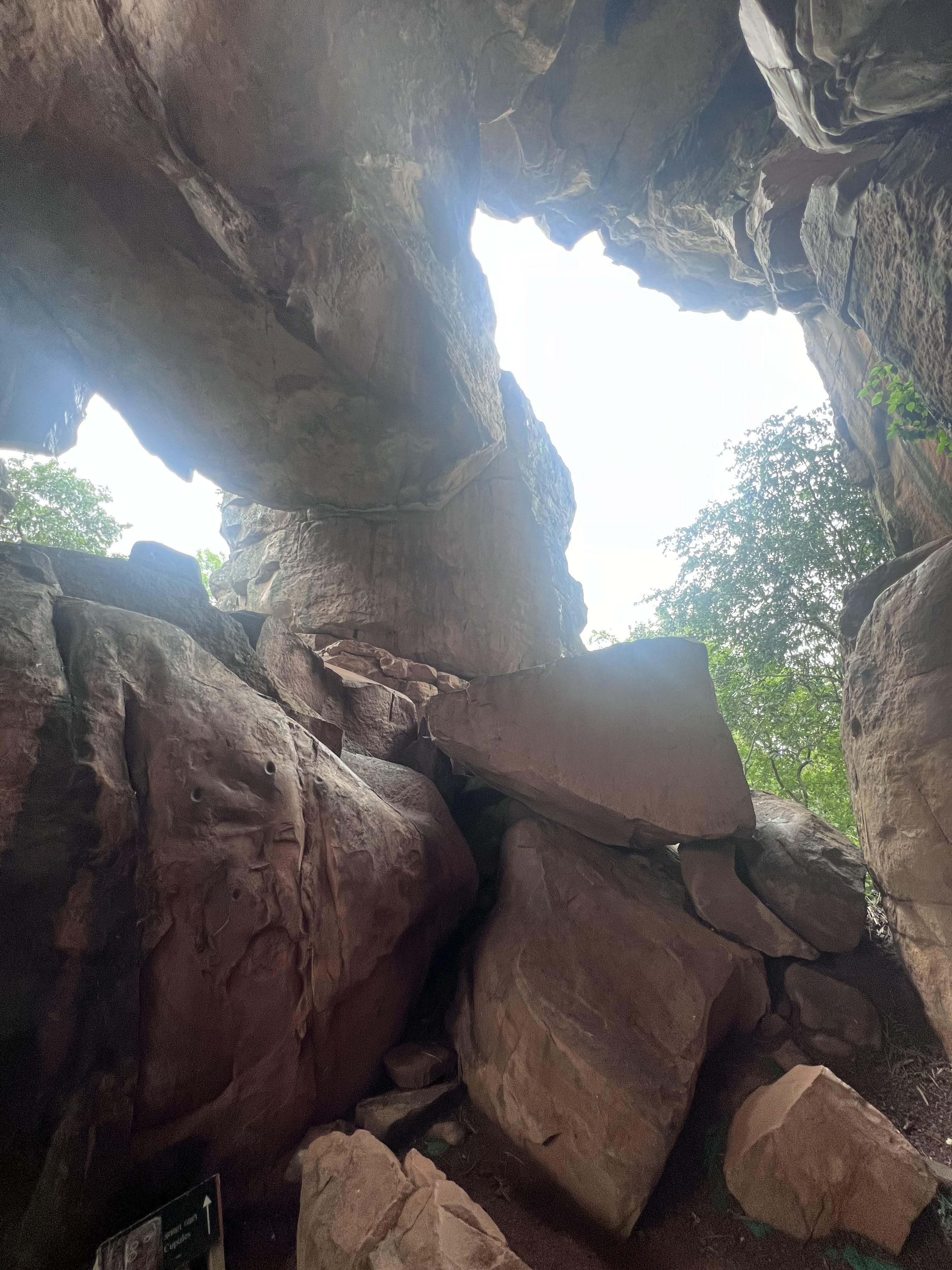
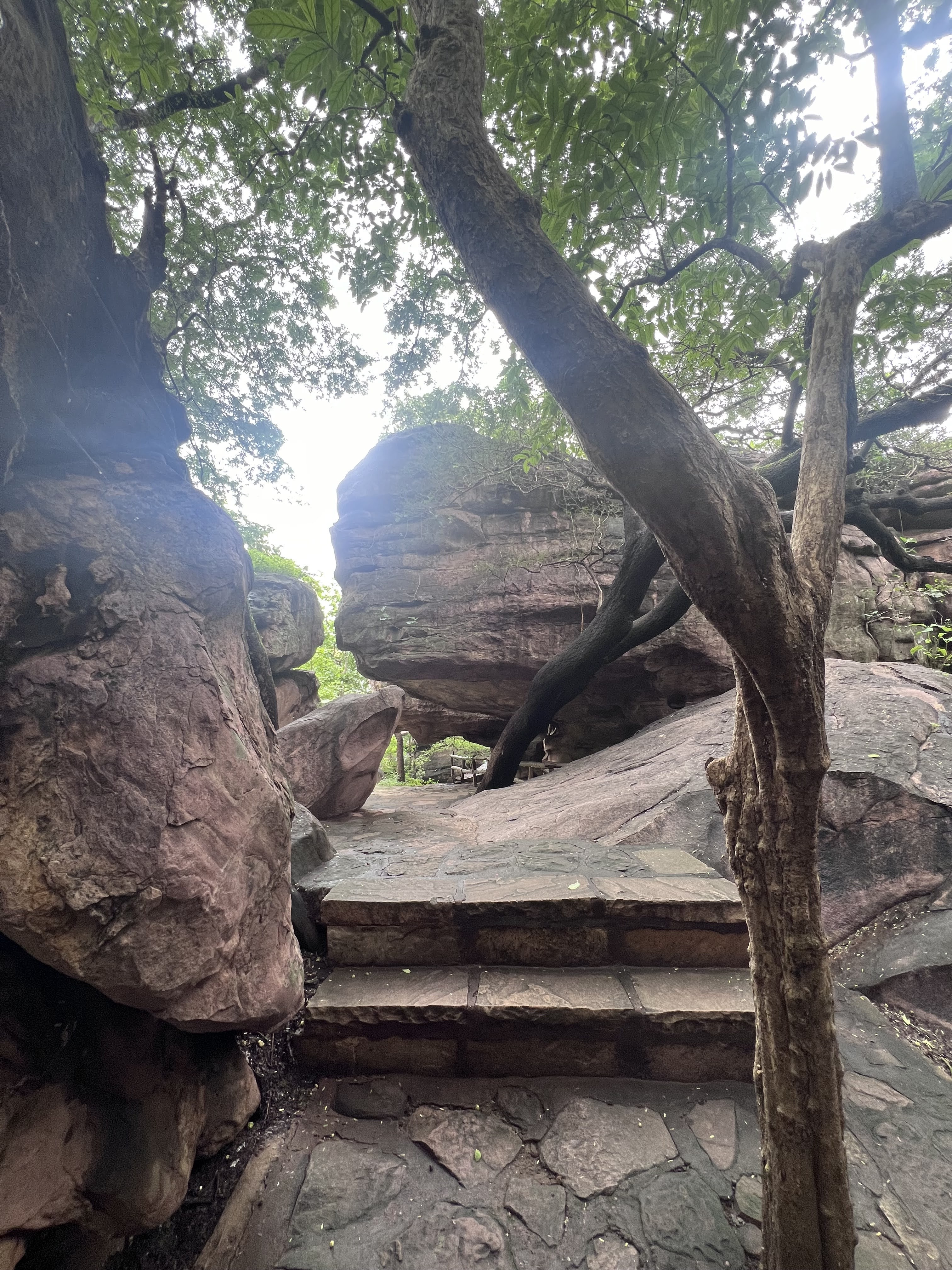
The shelters have been primarily formed due to natural causes, such as wind and rain, in the last few million years. The shelters are situated amid lush greenery of dense forest, rocky terrain and craggy cliffs. There are 21 villages around Bhimbetka. The area around it is sparsely populated primarily by the Gond tribe.
Discovery of Bhimbetka Rock Shelters
The paintings and rock shelters of Bhimbetka were discovered by Dr Vishnu Shridhar Wakankar in the year 1957-58. Dr Wakankar is considered one of India’s greatest archaeologists.
The story goes that Wakankar was on his way to Nagpur on a train from Chambal after unearthing rock shelters there. From the train, he saw some caves at a distance on a hill. Wakankar decided to explore these caves and unearthed one of the earliest dwellings of humans.
Wakankar was conferred Padma Shri by the Indian govt for his discovery and research in the field of archaeology.
Pre-Historic Paintings and Art
Studies show that Bhimbetka is one of the world’s earliest sites of cognitive human evolution.
The subjects of the paintings at Bhimbetka Rock Shelters include linear depictions of human figures, hunting, riding, dance, warfare and day-to-day activities, like honey collection and household scenes of the inhabitants. Animals, like bison, tigers, lions, wild boars, elephants, antelopes, dogs, lizards and crocodiles, among others feature in the paintings. Some religious and ritual symbols, too, are painted.
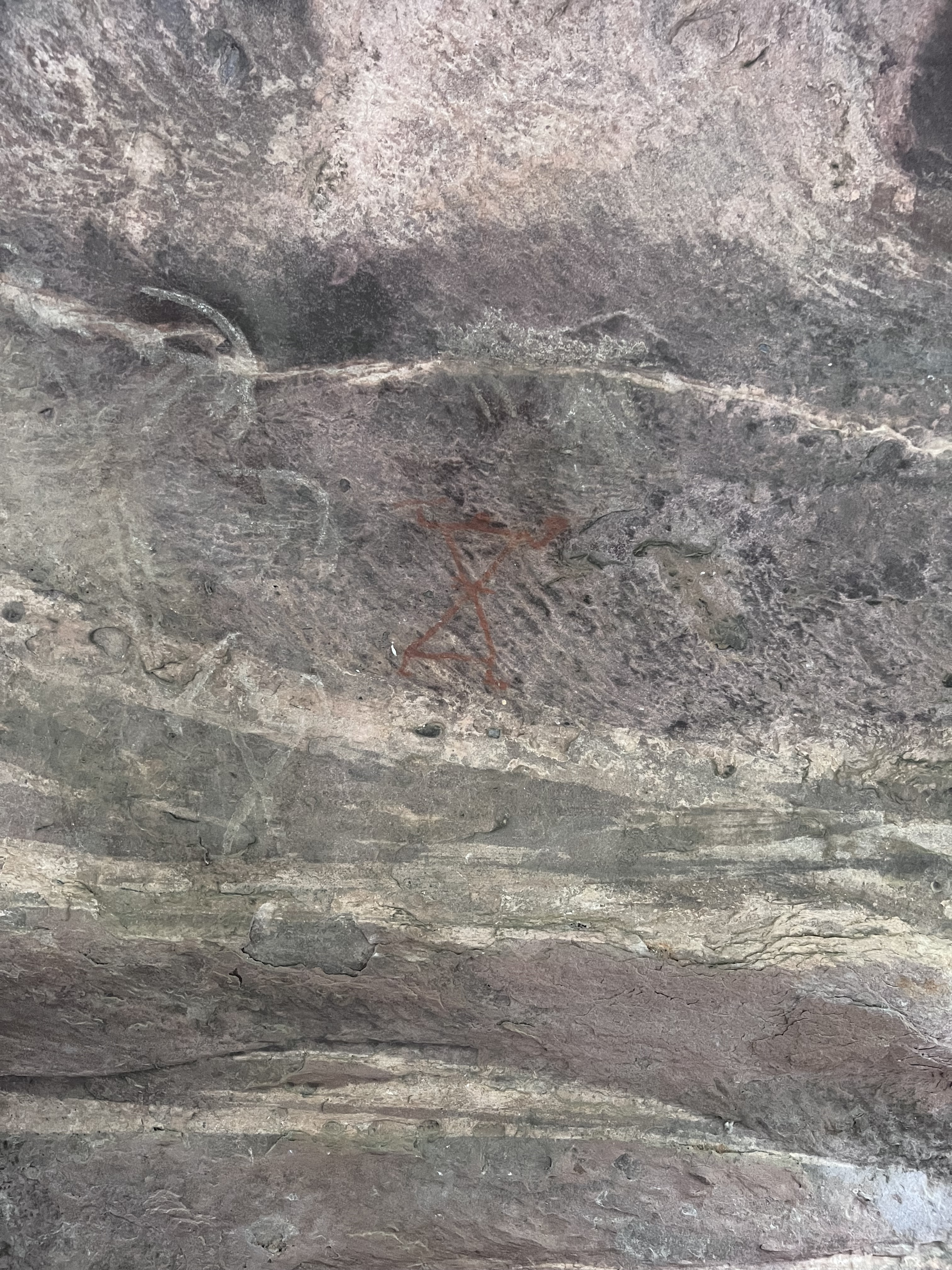
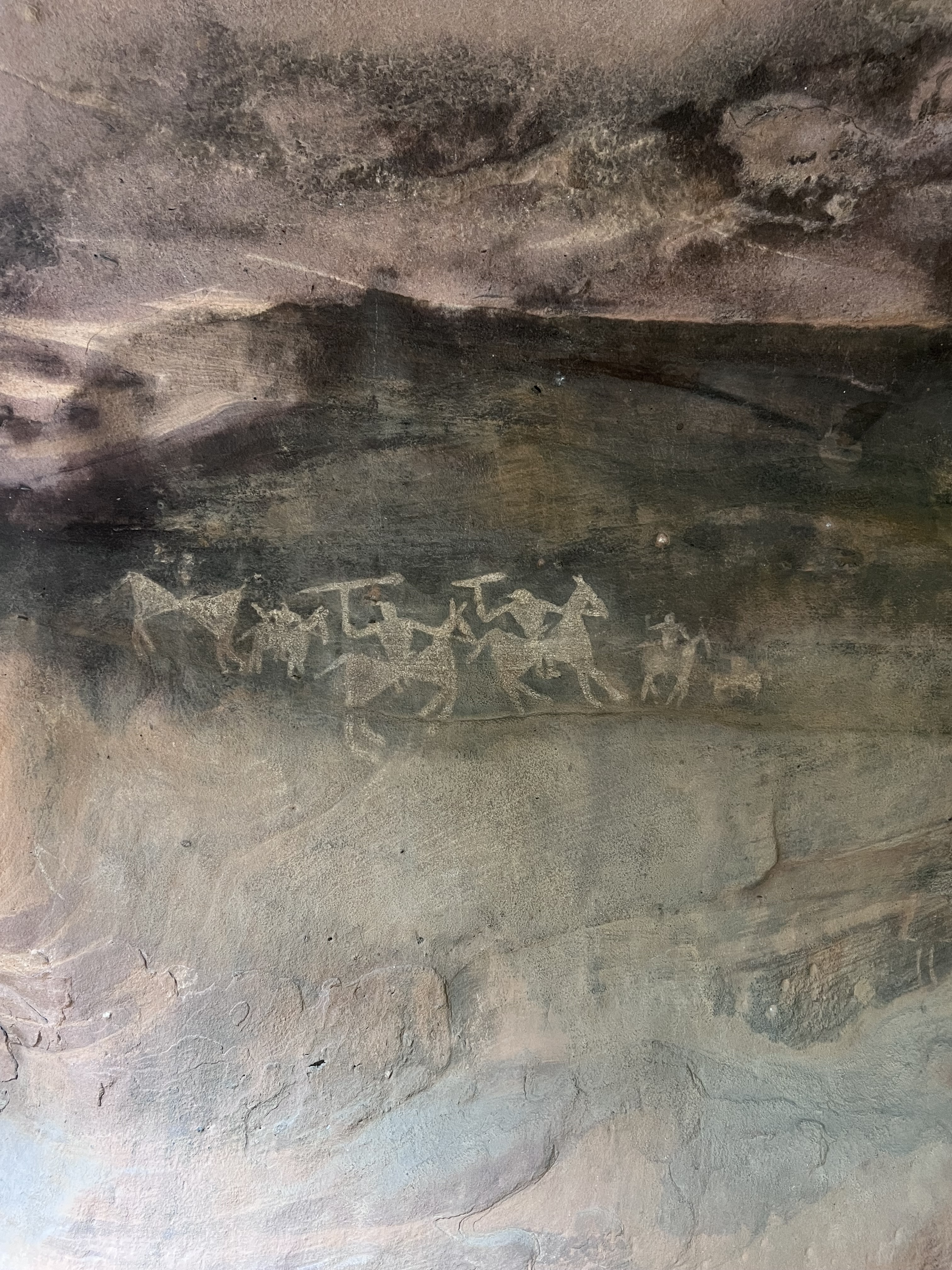
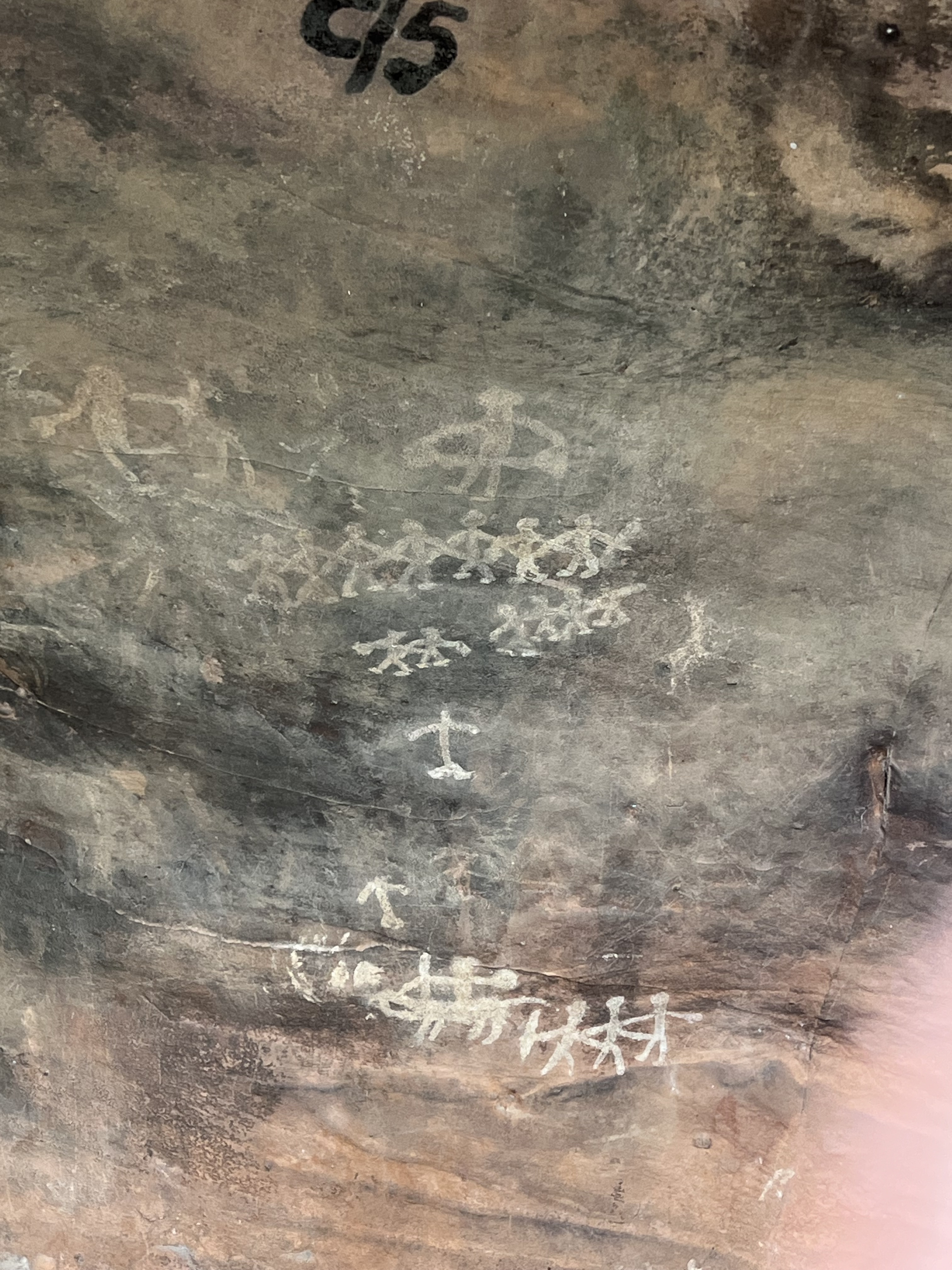
The mineral colours used for paintings are red, green, ochre and white. The colours were prepared by using extracts of leaves and even sometimes the fat of animals. The cave-dwellers also prepared colours by combining manganese, hematite, soft red stone and wooden coal.
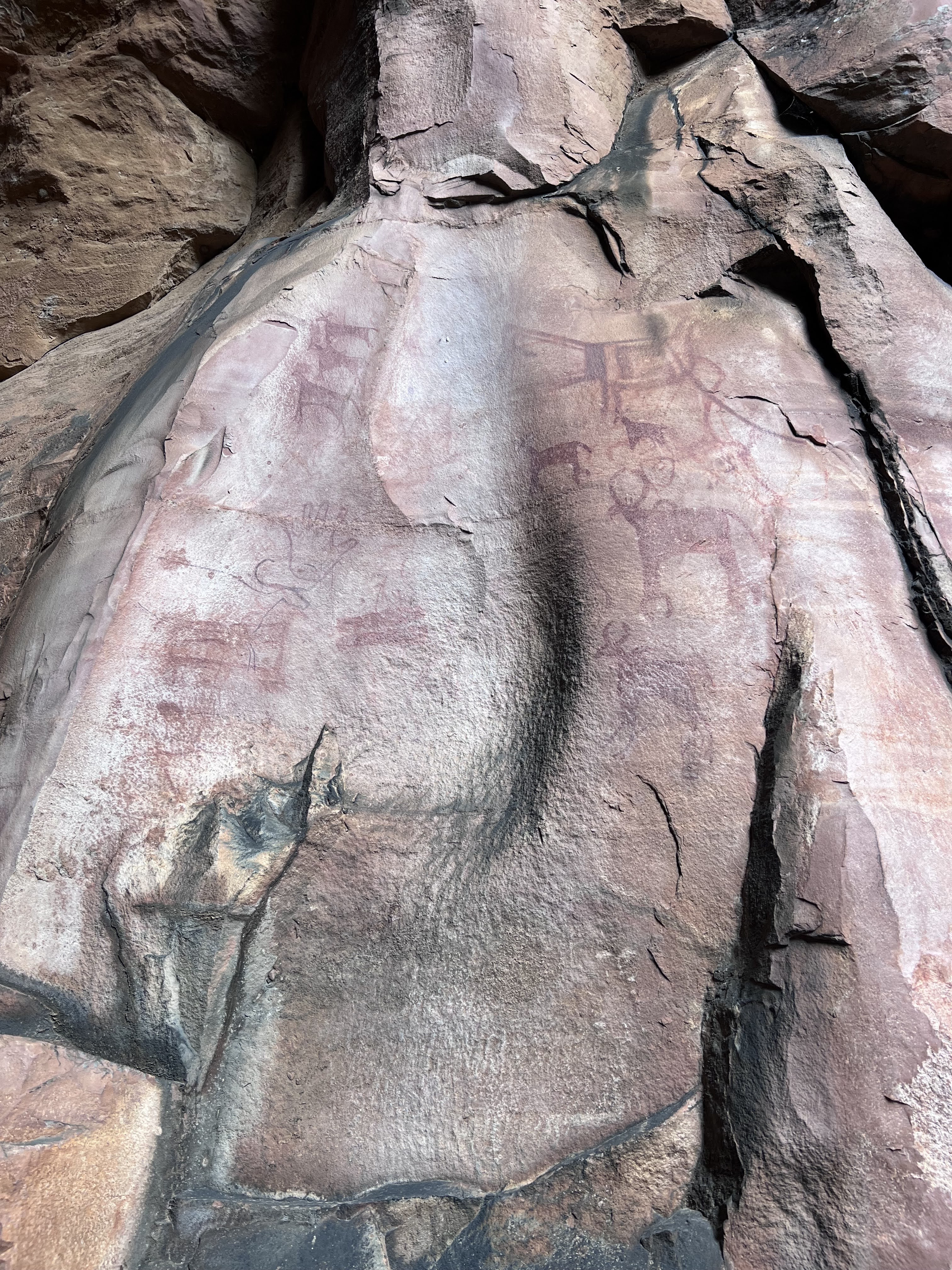
The colours have remained intact even after so many centuries due to the chemical reaction resulting from the oxide existing on the surface of the rocks.
UNESCO World Heritage Status
The Bhimbetka Rock Shelters was awarded the UNESCO World Heritage Site status on July 9, 2003, for its reflection of a long interaction between people and the landscape and for being closely linked to the hunting and gathering economy as demonstrated in the art and the relics.
Noteworthy Shelters to Visit
Studies show that Bhimbetka is one of the world’s earliest sites of cognitive human evolution. The cave dwellers left behind hand-axes, cleavers, scrapers to remove flesh and fat from the skin of slaughtered animals and tiny needles made from hard quartz.
In and around these caves, the paintings by the residents show great vitality and narrative skill.
Among the 15 shelters open for visitors, a few are remarkable for their discovery and use.
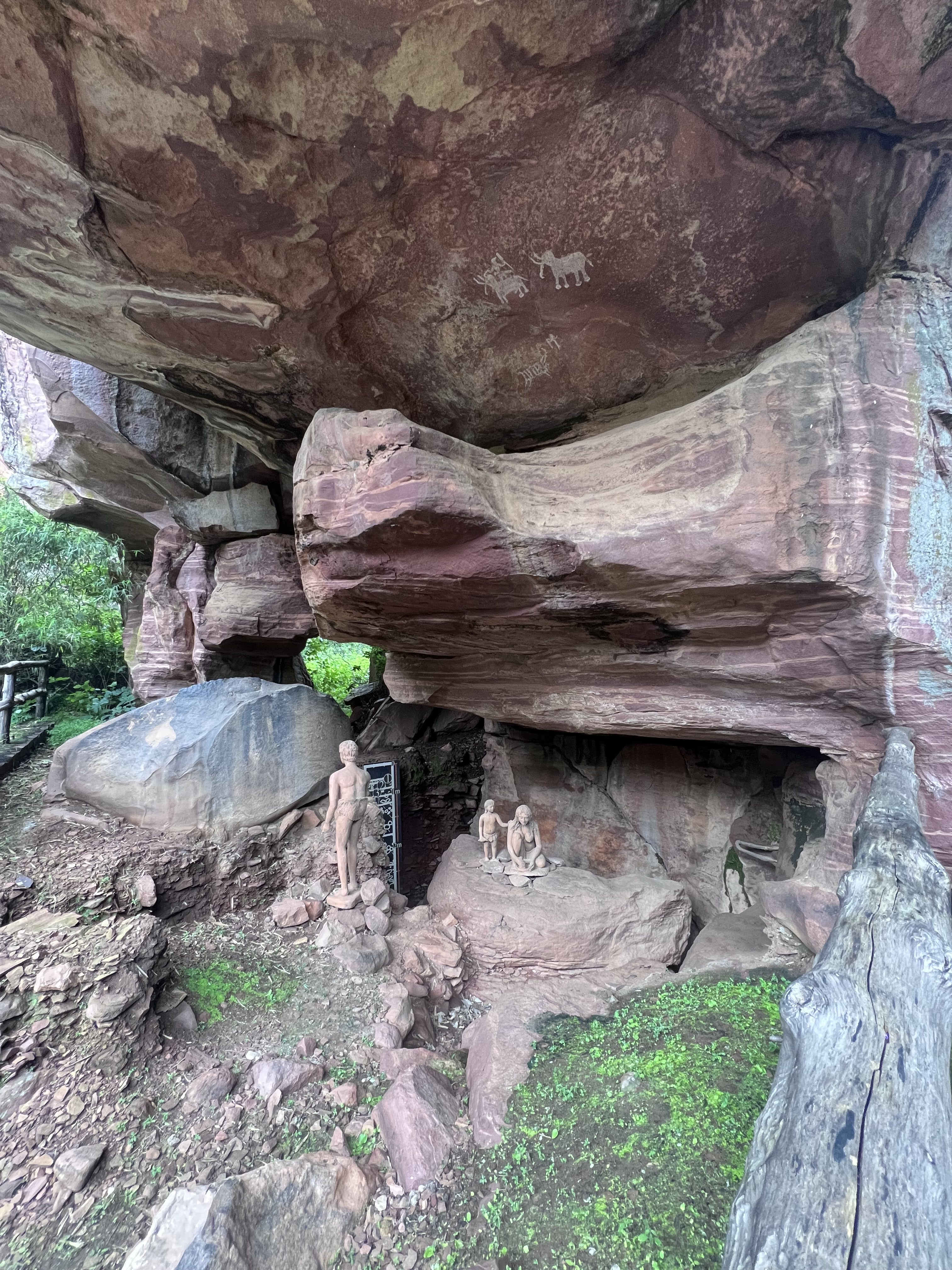
Shelter 1: As we enter the protected area, Shelter number 1 mesmerizes us with its sheer size. It is at a height of 20 meters from the ground. Clay human figures are displayed at the site to depict the daily life of the cave dwellers. Excavators found tools like hand-axe and cleavers at this shelter. This first shelter has drawings of two elephants.
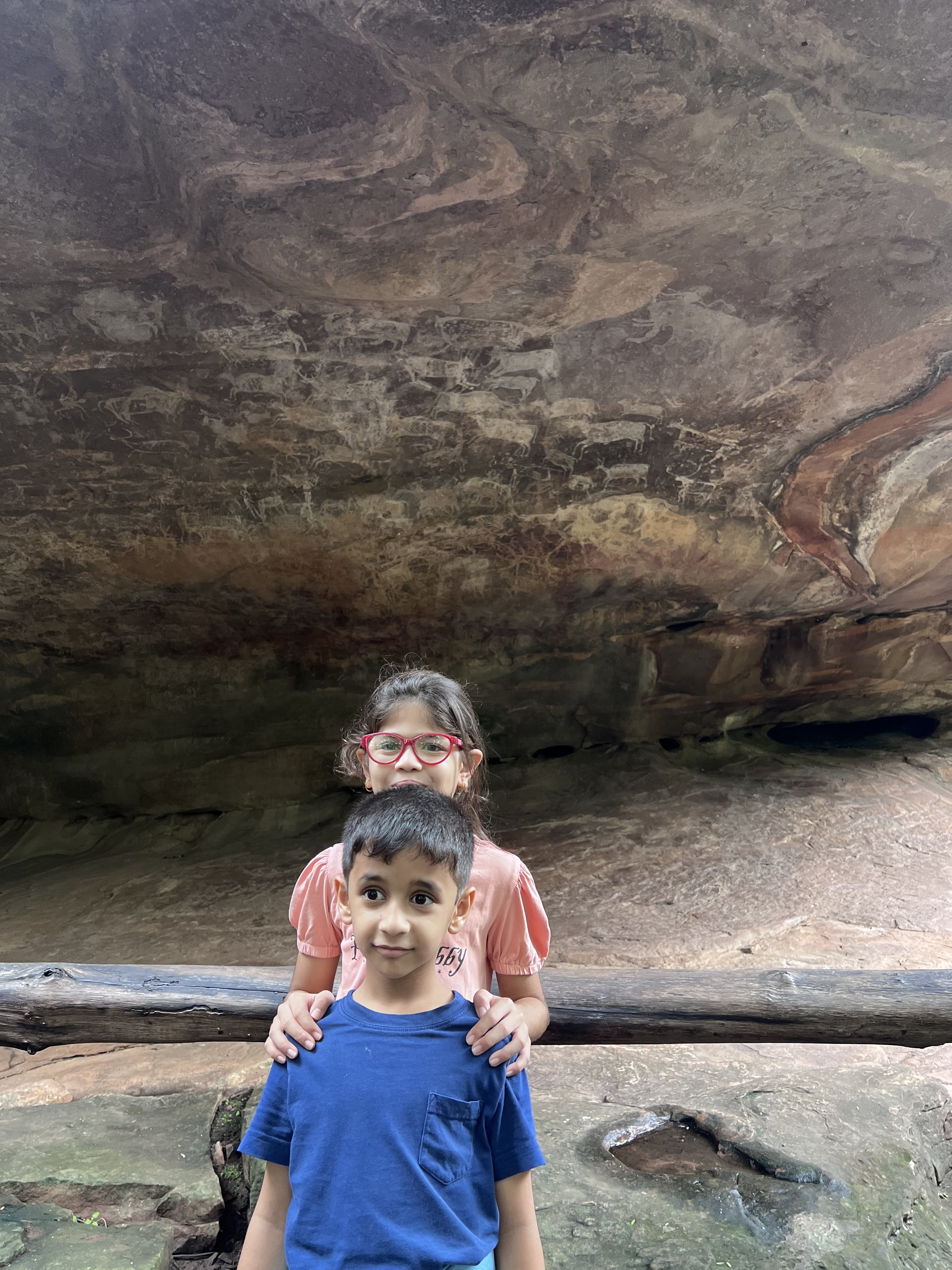
Shelter 4/Zoo Rock: An elaborately painted shelter number 4 is known as Zoo Rock. It has drawings of 252 animals of 16 different species. Yes, we counted them
Shelter 15/Boar Rock: Shelter number 15 is one of the most popular ones at Bhimbetka due to its unique drawing. Unlike other shelters that depict the daily life of early humans, shelter number 15 has a painting of a large boar-like-animal chasing away a human. It is also known as boar rock. The depiction is painted at 9.85m from the ground.
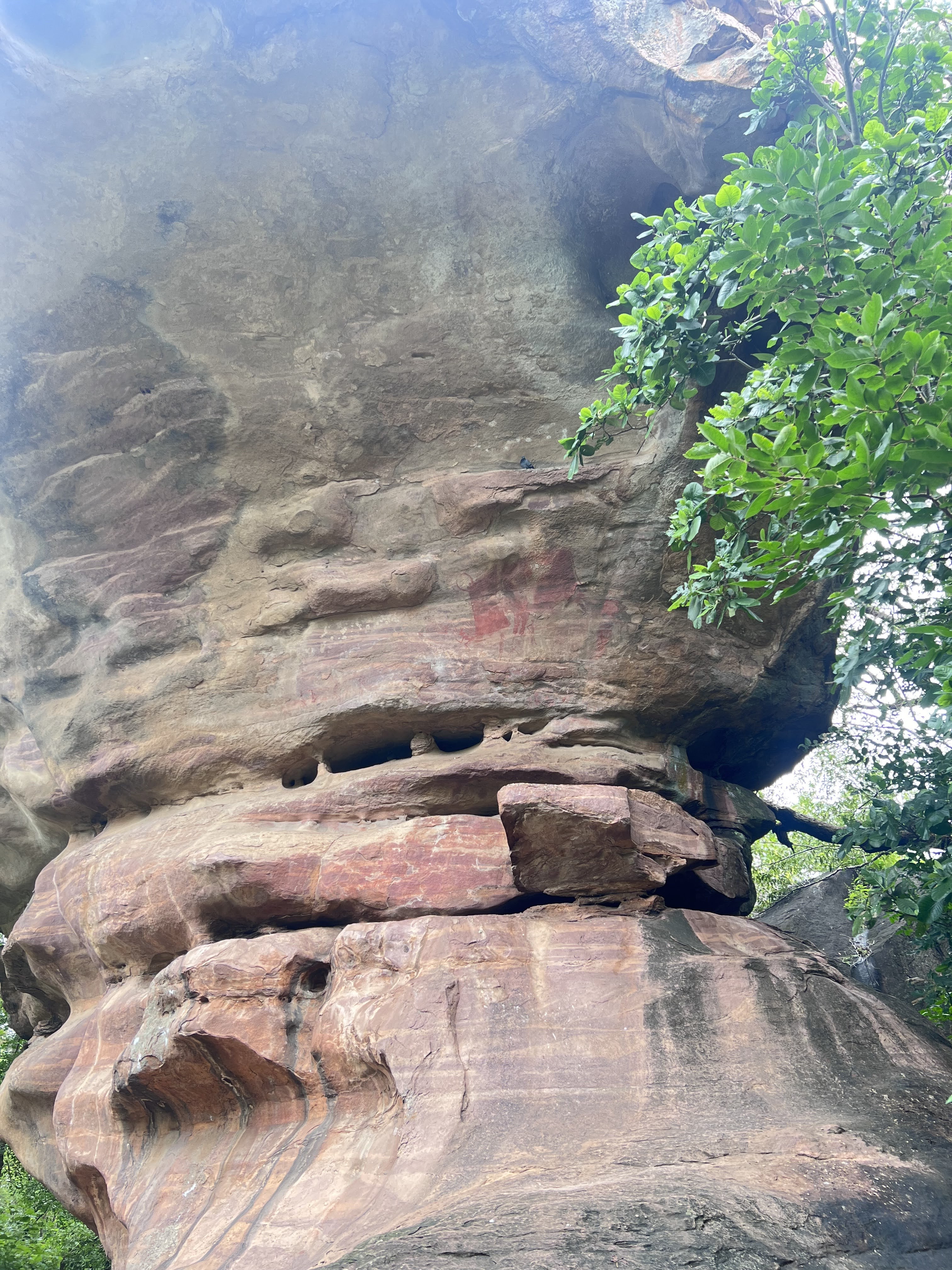
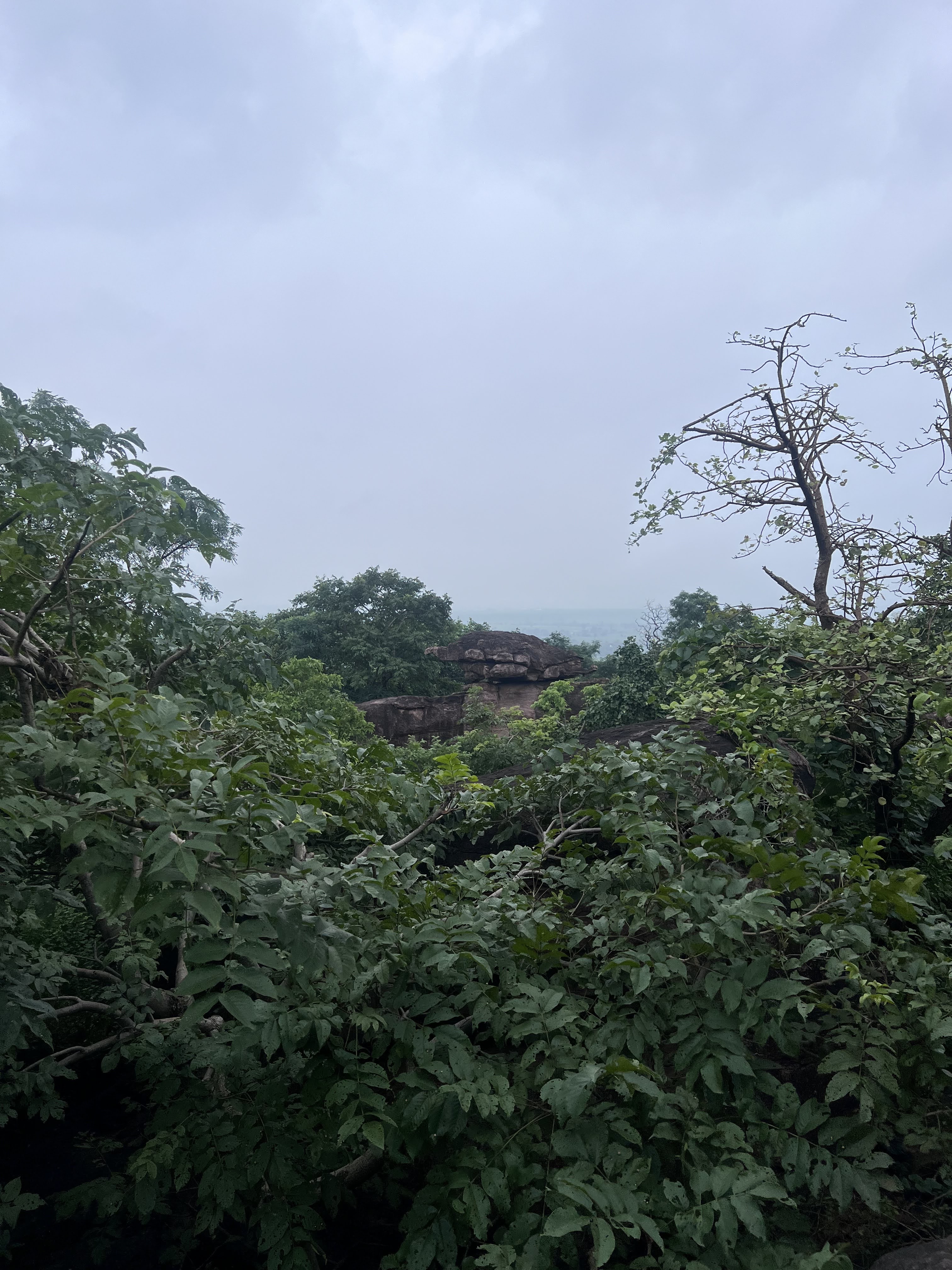
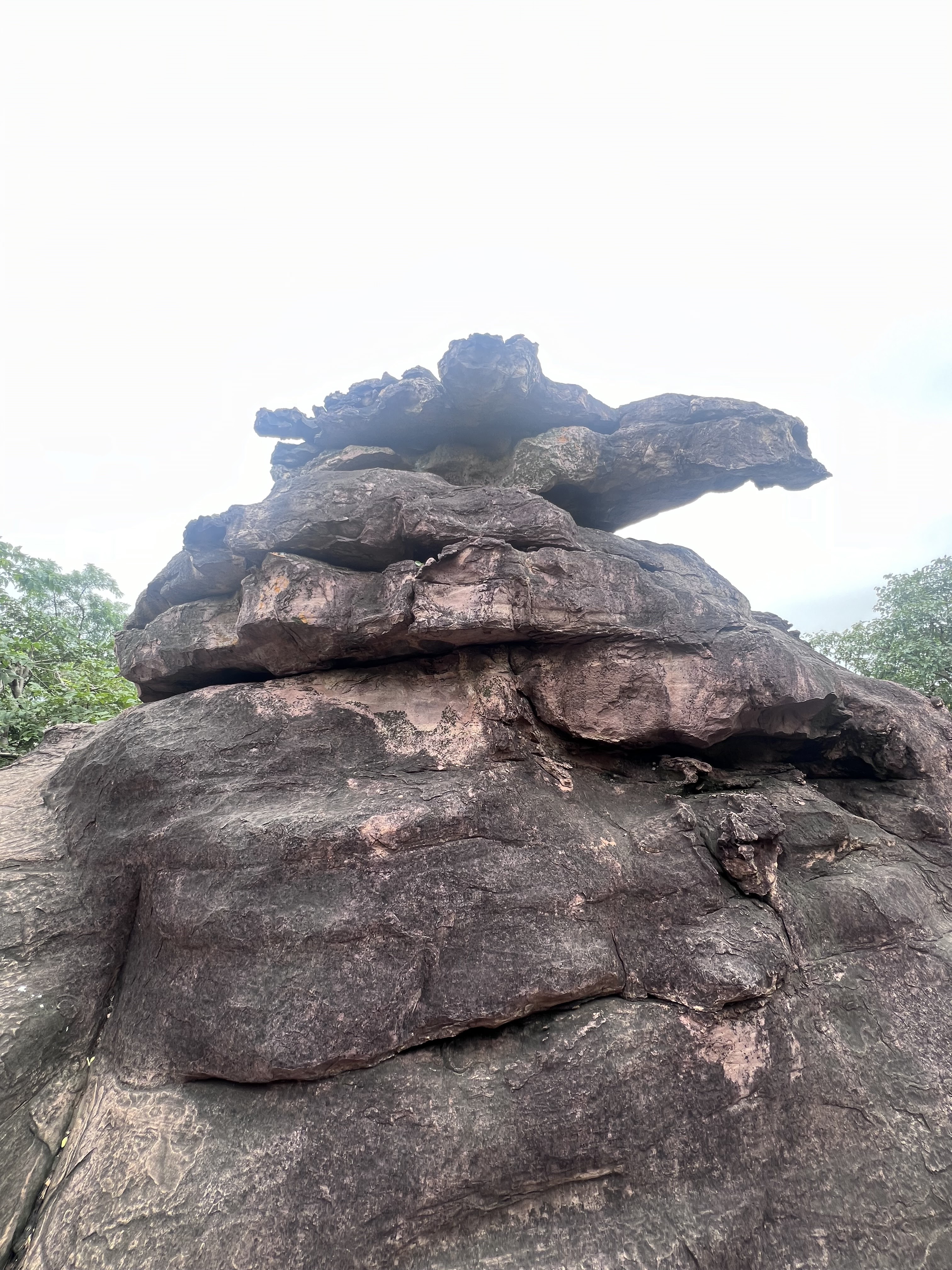
Turtle Rock: The Turtle Rock is a famous attraction at Bhimbetka. It is not a painting or a shelter but a rock formed by natural causes like wind resembling a turtle. The Turtle Rock point provides a nice panoramic view of the surrounding areas.
How to Reach Bhimbetka
Bhimbetka Rock Shelters are located around 45km from Bhopal, Madhya Pradesh. The capital city is well connected by air and rail network with all other major Indian cities.
The shelters are located atop a hillock and lacks direct public transport facility. The best way is to hire a taxi/cab from Bhopal to visit the heritage site. The drive is a little more than an hour through a good highway network.
Important Tips
- Wear comfortable walking shoes
- Hire the services of a licensed guide to take you through the shelters and explain all the details. Trust me, it helps
- Do NOT litter or make too much noise at the shelters. It is a protected area and part of a wildlife sanctuary
- Do NOT touch the paintings
- Carry enough food or water as there are no eateries around. The nearest restaurant is at the bottom of the hillock which is run by the state tourism board. The restaurant is along the railway tracks and serves decent food
- Toilet facilities are available near the parking area
*****

 Tugging My Luggage